

Monday, 10 August, 2026г.
















Где искать: по сайтам Запорожской области, статьи, видео ролики
пример: покупка автомобиля в Запорожье
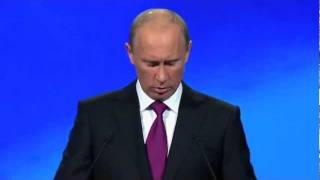
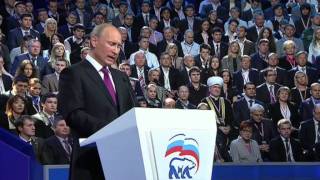
Д.Медведев.Выступление на открытии.11.06.08.Part 2
 У вашего броузера проблема в совместимости с HTML5
Answers to Questions from Delegates at the X World Russian Press Congress.Part 2 June 11, 2008 World Trade Centre, Moscow Выступление на открытии X Всемирного конгресса русской прессы. 11 июня 2008 года Москва QUESTION: Dmitry Anatolevich! In your opinion, how can you ensure cooperation between the media and the state to counter effectively modern challenges and threats, including xenophobia, extremism and fascism? DMITRY MEDVEDEV: Unfortunately, these threats will not disappear. Moreover, perhaps we are beginning to encounter them in places and on occasions that we had not previously anticipated. I will say frankly that when I was still a student at the university, I thought that, despite all the difficulties of life in the Soviet Union (everybody knows what they were: we had many shortcomings), xenophobia, extremism and resentments caused by nationalistic feelings and religious differences threatened neither the Soviet Union in that period nor Russia subsequently. Unfortunately, I was mistaken. I wont bother to list the reasons here theyre obvious. Hundreds of books and thousands of articles have been written on this subject. We also do not live in a vacuum. Russia is a state that in a very short period of time has adopted a new political system and embraced the market economy. This could not help but provoke a number of negative processes, which led to the revival of such problems. Of course, we will fight them with all available means within the country, with every means at the disposal of law enforcement agencies and the judicial system in Russia. I know that such threats must also be fought in the media: in this sense you have a profoundly important mission ahead of you and one that will sometimes be delicate. But to fight them we need law enforcement measures, because if we do not apply the full force of law, the struggle only leads to a public outcry and attempts at exorcism, which are not particularly effective. That is why the state must do everything it can in this regard. I also have to say that today in other countries things are not perfect either. Unfortunately, these phenomena exist throughout the former Soviet Union as well. This is in effect a problem for all of us. And I think we should frankly and without hypocrisy identify these phenomena for what they are. Once again I would like to say that all the same I think that to a large extent this is an issue for the state. But in this sense the media, the Russian-language press and the Russian media, can fulfill their noble mission. And I hope that they will help the state by ensuring that, if it does not succeed in eliminating them, it will at least drastically reduce the number of such criminal manifestations in our country and will also show that such problems exist in other states. Once again I repeat, in many countries this problem is just as bad as it is in ours. QUESTION: Dear Mr President! I want to ask a question that came to me last week in Berlin, when I listened to your very interesting speech at the Hotel Intercontinental. Among other things you talked about how quickly and intensively new information space is being created as the Internet, television and electronic media come together. This is a very interesting, very keenly observed movement. You pointed out that today the states task, the authorities task in all countries is not to regulate this space or institutionalize it, but rather to preserve some sort of moral and cultural values within it, and that today nobody in Germany, Russia or any other country knows exactly how do to this. I would like to take this opportunity to ask you, how do you see the steps that need to be taken? What can we actually do in this area? DMITRY MEDVEDEV: Thank you very much for asking this question and for having listened so attentively to my remarks in Berlin. This is a very difficult issue. I did say and I repeated it today 10 or 15 minutes ago that the world of information has become completely global. And in a practical sense there are no legal constraints for the distribution of media, at least via the Internet. I believe that in general this affords humankind unprecedented opportunities. Despite all the costs there are immense benefits: the opportunity to be in continuous communication, the opportunity to appreciate all the achievements and treasures of civilisation and the opportunity of gaining access to the most interesting sources in a very short time, to the riches of human history.
Теги:
Дмитрий Медведев Dmitry Medvedev Kremlin Moscow President Russia Президент России Выступление открытии Всемирного конгресса русской прессы Answers Questions Delegates World Russian Press Congress
Похожие видео

Мой аккаунт