













Где искать: по сайтам Запорожской области, статьи, видео ролики
пример: покупка автомобиля в Запорожье
'They have broken ribs, broken bones, twisted ankles' - doctor on refugees at Poland-Belarus border
 У вашего броузера проблема в совместимости с HTML5
Follow us on Telegram:
https://t.me/s/ruptlynews
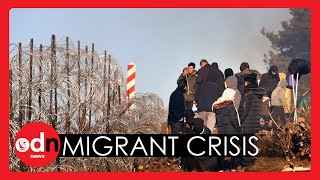
Dr Paulina Bownik, a general practitioner volunteering amid the Poland-Belarus border crisis, warned that the obstacles and challenges of assisting migrants have increased significantly in recent weeks, speaking from Bialystok on Wednesday.
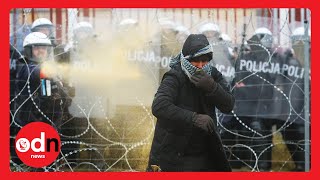
Bownik, who has been intervening to help migrants since August, said people trapped between Belarus and Poland are often beaten and mistreated by border forces. Among those she treated in the forests, many showed injuries from barbed wire placed at the border, as well as bruises, broken ribs, and twisted ankles. Many were also suffering from hypothermia.
The doctor, who confirmed that the Polish military had displayed aggression towards the doctors and activists, warned that with falling temperatures, people stranded in the forests “will not survive more than 24-48 hours,” aggravating the crisis and making it “harder and harder for them, especially for women and pregnant women and for small children.”
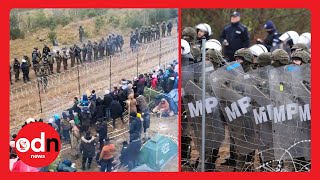
Since the Polish government implemented the three-kilometer zone along and across the border with Belarus in September, humanitarian aid and volunteers have been limited in their ability to assist in the crisis.
SOUNDBITES:
SOT, Doctor Paulina Bownik, GP and volunteer: “I started working with refugees since the beginning of the migrant crisis, it was in August, when 32 refugees from Afghanistan were stuck in Usnarz Gorny. I was trying to help them, because they mentioned that they needed medical help, and they were sick, and they were for almost a month, they were closed in this camp with almost no food, no water…They were just in the forest, in the fields, but the Polish soldiers they won’t let me help them.”
SOT, Doctor Paulina Bownik, GP and volunteer: “There is a lot, more and more beaten up people. Usually, the Belarusian border guards put a desk on the razor wire and they try to force people to go to the Polish side. People have wounds from the razor wire, but also they have bruises because of beating. They have broken ribs, broken bones, twisted ankles. Things like that.”
SOT, Doctor Paulina Bownik, GP and volunteer: “I was looking for a migrant who was in hypothermia and he was dehydrated, we found him after six hours of looking because there was no contact with him, he was almost unconscious, and we heated him, and after heating he had a temperature of 32 degrees. He was very dehydrated, we tried to give him an IV but he was so dehydrated that it was almost impossible.”
SOT, Doctor Paulina Bownik, GP and volunteer: “I had two pregnant women, one was at the beginning of her pregnancy, and one was nine months pregnant, she had a stomach ache, she had a urinary tract infection, but after I gave her medication she felt better and she just tried to walk to Germany.”
SOT, Doctor Paulina Bownik, GP and volunteer: “It will be harder and harder for them, especially for women and pregnant women and for the small children, with temperatures like that, a man without food and drink, I think he won’t survive more than 24-48 hours.”
SOT, Doctor Paulina Bownik, GP and volunteer: “Since that (the crisis), it was hard to help people but it was possible. They were thousands of people who were crossing the border and going further. But right now this is really hard because our military they are more and more aggressive, they are trying to scare us they are scaring the lawyers, doctors and activists and there’s more and more military.”
#migrants #Belarus #Poland
Video ID: 20211117-035
Video on Demand: https://ruptly.tv/videos/20211117-035
Contact: [email protected]
Twitter: http://twitter.com/Ruptly
Facebook: http://www.facebook.com/Ruptly