

Thursday, 18 June, 2026г.
















Где искать: по сайтам Запорожской области, статьи, видео ролики
пример: покупка автомобиля в Запорожье
Aivars Kalējs – Per aspera ad astra
 У вашего броузера проблема в совместимости с HTML5
Facebook ➝ https://www.facebook.com/CristianoRizzottoVidalPessoa
Website ➝ http://www.cristianorizzotto.com
Download my dissertation ➝ https://shareok.org/handle/11244/319757
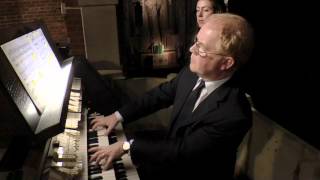
Cristiano (Kris) Rizzotto, organ
Recorded live in concert at the 1884 Walcker & Co. organ, Opus 413 (IV/P/124), in Rīgas Doms (Rīga Dom Cathedral), Latvia.
My tribute to the composer, Aivars Kalējs, in the occasion of his birthday on 22 April. I was honored to have him change stops for me on that day. This piece was dedicated to the memory of the children of Latvia who died during the Soviet deportations.
Organ specifications ➝ http://www.doms.lv/info/?mnu_id=70
Padomju deportācijās mirušo Latvijas bērnu piemiņai.
_ _ _ _ _ _ _ _ _ _
Having performed in North America, Europe and South America, Latvian Brazilian organist Cristiano Rizzotto (Kristiāns) is an active recitalist who frequently premières and performs works of contemporary composers. Composers such as Carson Cooman, Composer in Residence at Harvard University, Antoine Giovannini (France), and Aivars Kalējs, Concert Organist at Rīgas Doms (Latvia), have dedicated pieces to him. Cristiano the Organist & Choirmaster at Good Shepherd Catholic Church in Golden Valley, Twin Cities, MN. He is the Director of the Good Shepherd International Concert Series. Cristiano became a published composer after his Toccata was released by Wayne Leupold Editions in March 2014.
Rizzotto was named a member of The Diapason‘s 20 Under 30 Class of 2017. He was previously the organist at Benedictine Abbey in Rio de Janeiro, owner of one of the oldest organs in South America and where the Carioca monks have kept the tradition of the chants and liturgy alive since the 16th century.
Cristiano is currently a doctoral candidate at the American Organ Institute at the University of Oklahoma, under Dr. John Schwandt. Rizzotto holds a Bachelor’s degree in piano performance from the Universidade Federal do Rio de Janeiro (Magna cum Laude, 2010), and a Master’s degree in Sacred Music from East Carolina University (2013).
_ _ _ _ _ _ _ _ _ _
Per aspera ad astra – Aivars Kalējs (b. 1951)
Aivars Kalējs is one of the most important Latvian musicians of his generation. He studied composition and organ at the Latvian Conservatoire in Riga (1969 – 1977) under Ādolfs Skulte and Nikolajs Vanadziņš respectively. Having performed in almost all the European countries, Japan, U.S. and Canada, he is internationally known as a recitalist, composer, and a musicologist with published articles about organ history.
Kalējs worked on the monument board of the Latvian Ministry of Culture between 1980 and 1985. He focused on the history and preservation of the organs in Latvia and was able to add 250 organs to the country’s index of protected cultural monuments. He has been the organist at the Dome Cathedral in Riga for almost forty years. Kalējs also holds the position of organist at the New Church of St. Gertrude. He has written pieces for orchestra and for various instruments, but his organ works occupy the central place among his compositions.
Right before Christmas in 1989, when Latvia was claiming its rightful independence from Soviet occupation, Kalējs finished writing Per aspera ad astra, which has become known as one of his most colorful and impressive organ works. In the composer’s words, this piece is “dedicated to the memory of the children of Latvia who died during the Soviet deportations.”
The Soviet mass deportation from the Baltic states in 1949 sent about 94,000 Latvians, Lithuanians and Estonians to inhospitable regions of Siberia. Latvians were almost 50% of the group, and 72% of the people deported were women or children under the age of sixteen. This operation aimed to forcefully collectivise rural households, and to eliminate all support to those who were against the communist occupation. The prisoners were sent to the death camps “forever,” with no passports, only identification cards. Because the Soviet authorities failed to provide housing and clothing, and conditions of forced work were so hard, the death rate among deportees was very high. The Soviet deportations are considered an act of genocide. According to Heinrichs Strods, “Soviet prison camps could also be called death camps. Unlike the Nazi camps where people were killed systematically, the Soviet camps took their prisoners to slow painful death by imposing hard work and life conditions. Mostly the male prisoners died, families lost their fathers. A large number of children spent their childhoods in Siberia.”
Per aspera ad astra (from Latin, through hardships to the stars) is a programmatic and very powerful piece. It depicts the story of exile with a growing sense of despair through mostly downward motions and descending figures that culminates on an apotheotic stretto that shifts the direction of the phrases and melodies upwards, towards the stars in heaven. The dream of lost childhood fades into birdsong on a lonely 1’ flute in ppp.
Теги:
Rīga Riga Latvia Latvija Kalējs Aivars Kalējs Kristiāns Rizzotto Cristiano Rizzotto Cristiano Rizzotto Vidal Pessôa Pipe organ organ Ērģeles Ērģelnieks Ērģelniece Rīgas Doms Katedrāle Doma baznīcu John Schwandt Damin Spritzer Alexandre Rachid Andrew Scanlon American Organ Institute Oklahoma University ECU East Carolina University organist Doms Dom Latvietis Latviete Laura Rizzotto Herberts Cukurs Antinea Doloresa Cukurs Rizzotto
Похожие видео


Мой аккаунт