

Saturday, 19 September, 2026г.
















Где искать: по сайтам Запорожской области, статьи, видео ролики
пример: покупка автомобиля в Запорожье
Анатомия женский половой орган / Anatomy of the Female Sex Organs
 У вашего броузера проблема в совместимости с HTML5
The female reproductive system (or female genital system) contains two main parts: the uterus, which hosts the developing fetus, produces vaginal and uterine secretions, and passes the male's sperm through to the fallopian tubes; and the ovaries, which produce the female's egg cells. These parts are internal; the vagina meets the external organs at the vulva, which includes the labia, clitoris and urethra. The vagina is attached to the uterus through the cervix, while the uterus is attached to the ovaries via the Fallopian tubes. At certain intervals, the ovaries release an ovum, which passes through the Fallopian tube into the uterus. If, in this transit, it meets with sperm, the sperm penetrate and merge with the egg, fertilizing it. Corresponding equivalent among males is the male reproductive system.
During the reproductive process, the egg releases certain molecules that are essential to guiding the sperm and these allow the surface of the egg to attach to the sperm's surface then the egg can absorb the sperm and fertilization begins.[1] The fertilization usually occurs in the oviducts, but can happen in the uterus itself. The zygote then implants itself in the wall of the uterus, where it begins the processes of embryogenesis and morphogenesis. When developed enough to survive outside the womb, the cervix dilates and contractions of the uterus propel the fetus through the birth canal, which is the vagina.
The ova are larger than sperm and have formed by the time a female is born. Approximately every month, a process of oogenesis matures one ovum to be sent down the Fallopian tube attached to its ovary in anticipation of fertilization. If not fertilized, this egg is flushed out of the system through menstruation.
Же́нская полова́я систе́ма человека состоит из двух основных частей: внутренних и наружных половых органов. Наружные половые органы в совокупности носят название вульва.
Матка — мышечный грушевидный орган. Она располагается в середине брюшной полости сзади мочевого пузыря. Матка имеет толстые мышечные стенки. Внутренняя поверхность полости матки выстлана слизистой оболочкой, пронизанной густой сетью кровеносных сосудов. Полость матки соединяется с влагалищным каналом, который проходит через толстое мышечное кольцо, выдающееся во влагалище. Оно носит название шейка матки. В норме оплодотворенная яйцеклетка поступает из Фаллопиевых труб в матку и прикрепляется к мышечной стенке матки, развиваясь в плод. В матке протекает нормальное развитие плода вплоть до родов. Длина матки у женщины репродуктивного возраста в среднем равна 7—8 см, ширина — 4 см, толщина — 2—3 см. Масса матки у нерожавших женщин колеблется от 40 до 50 г, а у рожавших достигает 80 г. Подобные изменения возникают из-за гипертрофии мышечной оболочки во время беременности. Объем полости матки составляет ≈ 5 — 6 см³.
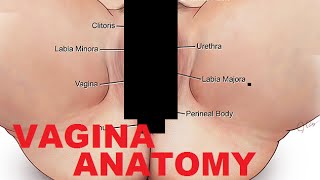
Влагалище — это толстая мышечная трубка, которая идет от матки и имеет выход наружу из тела женщины. Влагалище является приемником мужского копулятивного[4] органа во время совершения полового акта, приемником семени во время полового акта, а также является родовым каналом, по которому выходит плод после завершения своего внутриутробного развития в матке.
Теги:
женский половой женские половые женский половой орган женски половые органы женские половые органы женский половый орган женской половой системы женская половая система женские половые губы видео женские половые строение женской половой строение женских половых женский половой орган видео женские половые органы видео строение женских половых органов женских половых анатомия System Female Reproductive Picture Female Reproductive Organs Reproductive System
Похожие видео


Мой аккаунт