

Saturday, 22 August, 2026г.













Где искать: по сайтам Запорожской области, статьи, видео ролики
пример: покупка автомобиля в Запорожье
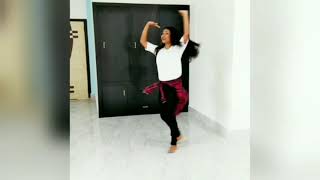
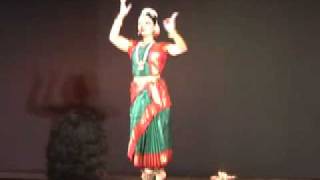
Beautiful Indian Woman Dancing A Dance of India
 У вашего броузера проблема в совместимости с HTML5
Free video about Indian dance. This free video was created for you by http://epsos.de and can be used for free under the creative commons license with the attribution of epSos.de as the original author of this Indian dance video.
Thank you for supporting the creative commons movement !!
In India, dance has a religious origin. In the Hindu mythology, the Indian dance is a sacred act, an activity that is older than the earth itself is in accordance to the Shiva, the god of creation and destruction have the world destroyed and recreated with his Indian dance.
They are called classical Indian dances of India to those included in the "Natya-Shâstra", an artistic treatise attributed to rishi Bharata written circa 400 B.C. An important issue to consider is that the concept of "classical Indian dance" is distinctly western stamp, and-by analogy alluded to in the case of India to artistic representations of ancient tradition: the term actually Natya, resulting in simplified form as "Indian dance" has a broader meaning than the word is in the West, as it involves singing, music, theater and other disciplines.
Bharata Natyam is an original solo Indian dance of southern India, having many technical difficulties and, therefore, must in general be studied from an early age. Odissi classical Indian dance is another described in the "Natya-Shâstra" ; Over 2,000 years of tradition, which recognizes origins in Orissa, in the scheme of worship Jagannatha. Shabdam, dance accompanied by a poem or a song about a topic or devotional love. It is the first narrative section of the show. In this Indian dance technique Interpreter body is divided into three parts: the head, legs and head. The movements and expressions are intended to describe and represent strong emotions. The Indian dance is accompanied by a poetry whose theme is the love between Krishna and Radha.
Many of the ancient sculptures in Hindu temples are based on Bharata Natyam dance postures, since the Bharatanatyam becomes the earthly representation of the Indian dance of Apsarās, the celestial dancers. In the most essential sense, a Hindu deity is a revered being in his temple / residence, which provides a standard set of religious services called Sodasa upacharas among which are music and Indian dance, pleasing to the senses. Thus, many Hindu temples traditionally maintained complements of musical and Indian dance training, like the Indian rulers. The dance form Bharatanatyam and Carnatic music and is deeply based in Bhakti. Is said to be the embodiment of music in visual form, a ceremony, and an act of devotion. Dance and music are inseparable forms: only Sangeetam (words or raga or melody) can Indian dance be conceptualized.
Bharatanatyam is considered a Indian fire dance, a mystical manifestation of the fire element in the human body. It is one of the five major styles, one for each element, that include element of water and element of air. The movements of an authentic Bharatanatyam dancer resemble the movement of a dancing flame. Currently, Bharatanatyam is rarely practiced as Natya Yoga, a traditional meditative sacred, except by very few orthodox schools.
Local kings used to invite Indian dancers to see them dance in the court, prompting the emergence of a new category of dancers-called rajanarthaki - which in turn influenced the technique and repertoire of the recitals. A devadasi had to be content to go unnoticed in their Indian dance, and offered surrendered to his Lord. The karanas 108 are transitional movements that mark the Bharatanatyam and other classical dances of India. Most of this 108 karanas have a static pose that acts as its centerpiece. It is assumed that the artist must stand and hold it for a specified period of about half a second.
The series of steps adavus are established, and its implementation varies greatly from one style to another. Most schools recognize 108 basis adavus, while others increase this figure to 150. Few professional Indian dancers use more than 60. A combination of adavus called Jathi generally developed in an exercise Nritta parts of Bharatanatyam.
Kathak : narrative Indian dance originated at about the sixteenth century, showing influences of the Mughal court, characterized by twists and quick steps. Kathakali : originated in Kerala in the seventeenth century, is a form of danced drama that includes forms of Bharata Natyam, Mudras and vocal and instrumental music. Sattriya : orginada is a ceremonial dance in Assam in the fifteenth century, with topics usually mythological. Chhau : tribal martial Indian dance form of Orissa, originally appeared as part of the solar festivities for the month between March and April.
Thank you for supporting the creative commons movement !!
Теги:
best free creative commons beautiful most amazing cool awesome great sweet india dance woman female yoga dancing traditional costume colorful face classic asia asian cute performance Dance In India show art colors singapore singapur south Asia indians nice sweat smile eyes head fun live moves Bollywood
Похожие видео

Мой аккаунт