

Friday, 07 August, 2026г.
















Где искать: по сайтам Запорожской области, статьи, видео ролики
пример: покупка автомобиля в Запорожье
Brandenburg Concerto No. 5 (Allegro) J.S. Bach Synthesia
 У вашего броузера проблема в совместимости с HTML5
First Movement of the Brandeburg Concerto No. 5 by J.S. Bach.
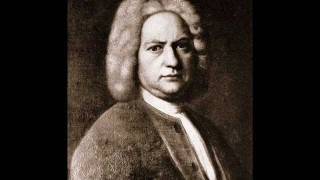
The Brandenburg Concertos by Johann Sebastian Bach (BWV 1046–1051, original title: Six Concerts à plusieurs instruments)[are a collection of six instrumental works presented by Bach to Christian Ludwig, Margrave of Brandenburg-Schwedt,[2] in 1721 (though probably composed earlier). They are widely regarded as some of the best orchestral compositions of the Baroque era
Title on autograph score: Concerto 5to à une Traversiere, une Violino principale, une Violino è una Viola in ripieno, Violoncello, Violone è Cembalo concertato.[1]
Allegro
Affettuoso in B minor
Allegro
Concertino: harpsichord, violin, flute
Ripieno: violin, viola, cello, violone, (harpsichord)
Duration: About 23 minutes
The harpsichord is both a concertino and a ripieno instrument: in the concertino passages the part is obbligato; in the ripieno passages it has a figured bass part and plays continuo.
This concerto makes use of a popular chamber music ensemble of the time (flute, violin, and harpsichord), which Bach used on its own for the middle movement. It is believed that it was written in 1719, to show off a new harpsichord by Michael Mietke which Bach had brought back from Berlin for the Köthen court. It is also thought that Bach wrote it for a competition at Dresden with the French composer and organist Louis Marchand; in the central movement, Bach uses one of Marchand's themes. Marchand fled before the competition could take place, apparently scared off in the face of Bach's great reputation for virtuosity and improvisation.
The concerto is well suited throughout to showing off the qualities of a fine harpsichord and the virtuosity of its player, but especially in the lengthy solo cadenza to the first movement. It seems almost certain that Bach, considered a great organ and harpsichord virtuoso, was the harpsichord soloist at the premiere. Scholars have seen in this work the origins of the solo keyboard concerto as it is the first example of a concerto with a solo keyboard part.
An earlier version, BWV 1050a, exists, and has many small differences from its later cousin, but no major difference in structure or instrumentation. It is dated ca. 1720/1721.
Sheet Music (Complete):
http://imslp.org/wiki/Brandenburg_Concerto_No.5_in_D_major,_BWV_1050_(Bach,_Johann_Sebastian)
Midi File:
http://www.midiworld.com/bach.htm
Enjoy the music people!
Теги:
bach johann sebastian concerto concierto brandenburg brandenburgo allegro first movement synthesia RedGreyMusic tutorial
Похожие видео
Мой аккаунт