

Monday, 22 June, 2026г.
















Где искать: по сайтам Запорожской области, статьи, видео ролики
пример: покупка автомобиля в Запорожье
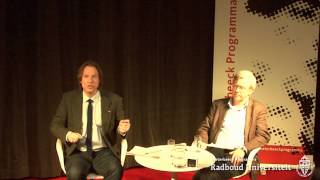
Chris Webster: Making cities work with less but better planning
 У вашего броузера проблема в совместимости с HTML5
Alexander von Humboldt Lecture Series 2012-2013 on "Making Cities Work" see also: www.ru.nl/humboldt Alexander von Humboldt Lecture: 'Making cities work with less but better planning' Prof. Chris Webster, School of City and Regional Planning, Cardiff University, UK Monday, Nov. 26, 2012 Abstract: Government-organised urban planning is a public good that in developed economies, tends to be over-supplied. The creative destruction of the current recession is yeilding interesting experiments in reducing planning's scale and scope. A truly creative response, however, requires fundamental reassessment of both the objectives and means of urban planning and bold policy trials. It also needs radically different spatial planning theory. Above all, that theory needs a better appreciation of the ability of cities to self-organise. It requires a realistic understanding of the types of coordination needed to make complex self-organising urban systems more privately and socially efficient. The theory needs to be useful for practitioners charged with the difficult task of managing and governing cities with shrinking budgets. Any good spatial planning theory needs to bring together spatial analysis with well-formed behavioural theories about urban processes. In the lecture I shall (a) illustrate the problems and paradoxes of spatial plan-ning drawing on evidence from the UK and China; (b) illustrate the potential for cities to self-organise neighbourhood public goods, drawing on a ten year inter-national study of private neighbourhoods; and (c) illustrate a 'pared-back' theory of spatial planning that emphasises the optimisation of accessibility as the principal intervention. In (c), I show how a city's multi-modal transport network can be thought of as a geometric and topological fingerprint (we call it spatial DNA in Cardiff) that has the effect of distributing a city's agglomeration economies. I show how it is possible to recover accurate measurements of those distributed benefits from a network model of an urban transportation network in a way that allows us to make objective planning decisions in pursuit of social health and private wealth.
Теги:
Radboud University Nijmegen Human Geography Prof. Huib Ernste Prof. Chris Webster Making Cities Work
Похожие видео



Мой аккаунт