

Thursday, 06 August, 2026г.
















Где искать: по сайтам Запорожской области, статьи, видео ролики
пример: покупка автомобиля в Запорожье
Clyde McPhatter Treasure Of Love Atlantic 1092 A
 У вашего броузера проблема в совместимости с HTML5
DISCLAIMER: All rights reserved to the production companies and music labels that distributed and produced the music and performance respectively. I've only added the footage as a tribute for historical, entertainment, and creative purposes with no financial gain. Copyright infringement not intended.
Clyde McPhatter Treasure Of Love Atlantic 1092 A 1956
Here is Clyde McPhatter (Mr. Dominos & Mr. Drifters) with "Treasure Of Love" on a nice, minty piece of shellac pressed by Atlantic back in 1956. Please Enjoy!
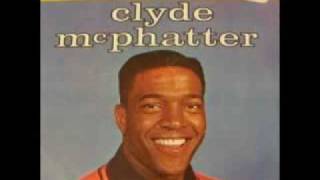
Born Clyde Lensley McPhatter in the tobacco town community of Hayti, Durham, North Carolina, on November 15, 1932, and raised in a religious Baptist family; the son of the Rev. George McPhatter and wife Beulah (though some accounts refer to her as Eva). Starting at age five, he sang in his father's church gospel choir along with his three brothers and three sisters. When he was ten, Clyde was the soprano-voiced soloist for the choir. In 1945, the Rev. McPhatter moved his family to Teaneck, New Jersey where Clyde attended Chelsior High School. He worked part-time as a grocery store clerk, and eventually was promoted to shift manager upon graduating high school. The family then relocated to New York City, where Clyde formed the gospel group The Mount Lebanon Singers.
In 1950, after winning "Amateur Night" at Harlem's Apollo Theater, McPhatter returned to his job as store manager but later was recruited by Billy Ward & the Dominoes, and was present for the recording of "Sixty Minute Man" for Federal Records, a song regarded as the "first record of rock 'n roll," produced by Ralph Bass.
Billy Ward and His Dominoes was one of the top R&B vocal groups in the country, beating The Clovers, The Ravens and The Five Keys, largely due to Clyde's fervent, high-pitched tenor. He is regarded as the main singer to infuse his gospel-steeped singing style into mainstream R&B, McPhatter was more widely imitated, and was a much bigger influence in the shaping of Doo-Wop/R&B. In his book The Drifters, Bill Millar names Ben E. King, Smokey Robinson of the Miracles, Sammy Turner, and Marv Johnson among the vocalists who patterned themselves after McPhatter. "Most important," he concludes, "McPhatter took hold of the Ink Spots' simple major chord harmonies, drenched them in call-and-response patterns and sang as if he were back in church. In doing so, he created a revolutionary musical style from which thankfully, popular music will never recover." Strangely, McPhatter didn't think much of his own singing abilities.
Ahmet Ertegun, eagerly sought McPhatter after noticing he was not present for an appearance. After locating him, McPhatter was then signed to Atlantic on the condition that he form his own group. McPhatter promptly assembled a group and called them The Drifters. They recorded a few tracks in June 1953, including a song called "Lucille," written by McPhatter himself. This group of Drifters did not have the sound Atlantic executives were looking for however, and Clyde was prompted to assemble another group of singers. The revised lineup recorded and released such hits as "Money Honey," "Such a Night," "Honey Love," "White Christmas" and "Whatcha Gonna Do," with the record label proudly displaying the group name "Clyde McPhatter & The Drifters."
In late 1954, McPhatter was inducted into the Army and assigned to Special Services in the continental United States, which allowed him to continue recording. After his tour of duty was up, he left The Drifters and launched a solo career.
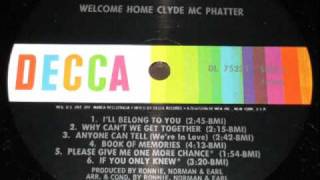
McPhatter would return to America in 1970, following his move from England, making a few appearances in rock 'n roll revival tours, but remaining mostly a recluse. Hopes for a major comeback with a Decca album were crushed on June 13, 1972, when Clyde McPhatter died in his sleep at the age of 39 from complications of heart, liver, and kidney disease, brought on by alcohol abuse, abuse that had been fueled by a failed career and the resentment he harbored towards the fans he felt deserted him. In a 1971 interview with journalist Marcia Vance, McPhatter told Vance "I have no fans." McPhatter died at 1165 East 229th Street, Bronx, New York, where he was living with Bertha M. Reid. They traveled together as he was trying to make a comeback.
McPhatter was a resident of Teaneck, New Jersey at the time of his death. He was buried at George Washington Memorial Park in Paramus, New Jersey.
Ruth Brown acknowledged in her later years that McPhatter was the actual father of her son Ronald, born in 1954. Ron now tours occasionally with a show of Drifters songs.
Turntable used: Audio Technica AT-LP120 USB Direct Drive inputted straight into the sound card using the built-in pre-amp from the turntable.
Cartridge used: ATP-2XN using 78 3 mil needle.
Теги:
1950's R&B
Похожие видео

Мой аккаунт