

Tuesday, 09 June, 2026г.













Где искать: по сайтам Запорожской области, статьи, видео ролики
пример: покупка автомобиля в Запорожье
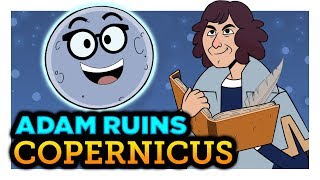
Copernicus | Wikipedia audio article
 У вашего броузера проблема в совместимости с HTML5
This is an audio version of the Wikipedia Article:
https://en.wikipedia.org/wiki/Nicolaus_Copernicus
00:01:21 1 Life
00:02:34 1.1 Father's family
00:04:45 1.2 Mother's family
00:08:01 1.3 Languages
00:09:15 1.4 Name
00:11:15 1.5 Education
00:11:24 1.5.1 In Poland
00:16:15 1.5.2 In Italy
00:22:28 1.6 Planetary observations
00:23:10 1.7 Work
00:38:00 1.8 Heliocentrism
00:40:36 1.9 The book
00:42:33 1.10 Death
00:45:20 2 Copernican system
00:45:29 2.1 Predecessors
00:52:50 2.2 Copernicus
00:55:59 2.3 Successors
00:58:58 3 Controversy
00:59:46 3.1 Tolosani
01:05:56 3.2 Theology
01:12:09 3.3 Ingoli
01:16:47 3.4 Galileo
01:17:57 4 Nationality
01:21:58 5 Commemoration
01:22:07 5.1 Copernicia
01:22:31 5.2 Copernicium
01:23:23 5.3 55 Cancri A
01:23:54 5.4 Veneration
01:24:13 5.5 Wrocław
01:24:30 5.6 Influence
01:25:03 6 See also
Listening is a more natural way of learning, when compared to reading. Written language only began at around 3200 BC, but spoken language has existed long ago.
Learning by listening is a great way to:
- increases imagination and understanding
- improves your listening skills
- improves your own spoken accent
- learn while on the move
- reduce eye strain
Now learn the vast amount of general knowledge available on Wikipedia through audio (audio article). You could even learn subconsciously by playing the audio while you are sleeping! If you are planning to listen a lot, you could try using a bone conduction headphone, or a standard speaker instead of an earphone.
Listen on Google Assistant through Extra Audio:
https://assistant.google.com/services/invoke/uid/0000001a130b3f91
Other Wikipedia audio articles at:
https://www.youtube.com/results?search_query=wikipedia+tts
Upload your own Wikipedia articles through:
https://github.com/nodef/wikipedia-tts
Speaking Rate: 0.9724108423553308
Voice name: en-US-Wavenet-C
"I cannot teach anybody anything, I can only make them think."
- Socrates
SUMMARY
=======
Nicolaus Copernicus (; Polish: Mikołaj Kopernik; German: Nikolaus Kopernikus; Niklas Koppernigk; 19 February 1473 – 24 May 1543) was a Renaissance-era mathematician and astronomer from Poland, who formulated a model of the universe that placed the Sun rather than the Earth at the center of the universe, in all likelihood independently of Aristarchus of Samos, who had formulated such a model some eighteen centuries earlier.The publication of Copernicus' model in his book De revolutionibus orbium coelestium (On the Revolutions of the Celestial Spheres), just before his death in 1543, was a major event in the history of science, triggering the Copernican Revolution and making a pioneering contribution to the Scientific Revolution.Copernicus was born and died in Royal Prussia, a region that had been part of the Kingdom of Poland since 1466. A polyglot and polymath, he obtained a doctorate in canon law and was also a mathematician, astronomer, physician, classics scholar, translator, governor, diplomat, and economist. In 1517 he derived a quantity theory of money—a key concept in economics—and in 1519 he formulated an economic principle that later came to be called Gresham's law.
Теги:
copernicus 1473 births 1543 deaths ac with 17 elements anglican saints biography with signature burials at frombork cathedral canons of warmia catholic clergy scientists copernican revolution german roman catholics german astronomers german economists german philosophers jagiellonian university alumni nicolaus copernicus people from royal prussia polish roman catholics polish astronomers polish economists polish philosophers
Похожие видео
Мой аккаунт