

Saturday, 15 August, 2026г.
















Где искать: по сайтам Запорожской области, статьи, видео ролики
пример: покупка автомобиля в Запорожье
Crash of Piper PA-24 Comanche In Arizona (With ATC)
 У вашего броузера проблема в совместимости с HTML5
On April 9, 2018, about 2048 mountain standard time, a Piper PA-24-260 airplane, N9456P, was destroyed when it impacted terrain shortly after takeoff from Scottsdale Airport (SDL), Scottsdale, Arizona. The 32-year-old airline transport pilot, student pilot, and 4 passengers were fatally injured. All onboard ranged in age between 22 and 32 and the group was en-route to Las Vegas "to party."
The airplane was registered to N9456P, LLC and operated by the pilots as a personal flight under the provisions of Title 14 Code of Federal Regulations Part 91. Night time visual meteorological conditions prevailed, and a flight plan was not filed. The airport destination for the not-happening-anymore Vegas vacation was North Las Vegas Airport (VGT), Las Vegas, Nevada.
Earlier that evening, the air transport pilot flew the airplane from VGT to SDL with the intention of picking up the passengers and flying them back to VGT. The inbound flight was his first flight in the airplane. Preliminary information indicated that the flight departed from VGT at 1842, and landed at SDL at 2018.
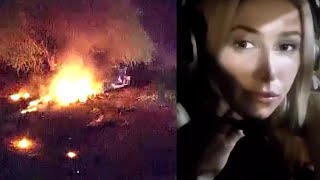
The airplane was equipped with 6 seats. A video surveillance camera at SDL, located on the ramp where the airplane was parked, captured the occupants begin to board the airplane about 2028. The footage revealed that two female passengers boarded the airplane first and were seated in the two aft seats. Next, a male passenger boarded the airplane and initially sat in the middle right seat but moved to the middle left seat when the third female passenger boarded; she then occupied the middle right seat. The student pilot then occupied the front left seat and the airline transport pilot occupied the front right seat. An onboard video posted to social media by the female passenger in the middle row incorrectly depicted the locations of each occupant, because the video was posted as a mirror image.
Footage from a midfield surveillance camera on the west side of the runway showed the airplane departing from runway 03, and appeared to indicate that the airplane's wings were rocking during and shortly after rotation. A witness at the airport reported to investigators that she noticed no sights sounds that might have indicated mechanical difficulties.
This video, captured by a traffic camera only a half-mile northwest of the end of the runway, shows what happened next.
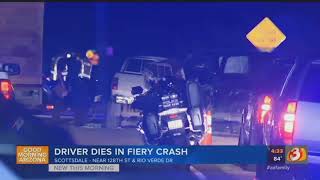
The airplane came to rest in a golf course about a quarter-mile north of the end of the departure runway. The main cabin was mostly consumed by fire. The outboard section of the right wing was separated, and in addition to thermal damage, exhibited substantial impact crush damage. The inboard section of the right wing remained attached to the fuselage, and the majority of the left wing was found separated from the fuselage. The wreckage was recovered to a secure facility for subsequent detailed examination.
Something to know about smaller general aviation aircraft: Weight and balance are a big deal and it's very easy to overload a general aviation plane. Additionally, most smaller general aviation aircraft have an "extra" pair of seats. Similar to tent sizes, a four-seater aircraft (with fuel) can realistically fly just two adults with some bags and a six-seater can comfortably handle just four adults and some bags.
This six-seater - fueled for a flight to Vegas - was carrying six adults and their bags, and was likely overweight. The NTSB has not yet released a probable cause for this crash, but it would be a big surprise if weight and balance aren't highlighted.
This crash was likely very avoidable, and it should serve as a reminder to pilots everywhere that saying "no" in the face of pressure to fly is an essential and life-preserving skill.
Note: Silence in the ATC audio has been truncated. Accordingly, the audio timing does not accurately represent communications relative to what you are seeing in the video. It's close, though.
~~~~~~
Got a story tip? Get in touch!
Email [email protected]
Похожие видео
Мой аккаунт