

Tuesday, 11 August, 2026г.
















Где искать: по сайтам Запорожской области, статьи, видео ролики
пример: покупка автомобиля в Запорожье
Developing your Trading Strategy - Timing of Entry
 У вашего броузера проблема в совместимости с HTML5
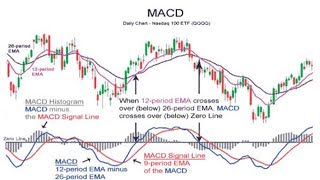
When defining the requirements for your trading strategy, and you are specifying the timing of your entry, traders like to use terms like set-ups, triggers and conditions. Set-ups are your reasons for looking at a potential trade. For example, where a price has been hitting a resistance level for the last few days and looks like breaking through, this might be regarded as a set-up. Another example might be the observation that the price is forming an ascending triangle or a double top, or any chart pattern. Such set-ups may encourage you to place a company on your watch list and wait for confirmation that the share price has broken out of the triangle or that the double top has actually occurred. Set-ups are normally a series of events observed on a chart over an extended period of time. In contrast, a trigger will, more than likely, be a single event that generates a buy signal for you. Examples include break-outs, significant candlesticks, or indicators crossing through relevant reference lines. Conditions are another part of your entry decision. Your conditions will normally be trend-based, because you want to trade with the trend. You may get several triggers when looking at a particular company, however, a trigger is not valid unless it is accompanied by an underlying condition. You might stipulate, for example, that a share price must be trading above its 30-day simple moving average and must have been doing so for at least the last five trading days, before you will act on triggers. If this condition is not met, you will not initiate a trade.
Похожие видео


Мой аккаунт