

Thursday, 04 June, 2026г.










Где искать: по сайтам Запорожской области, статьи, видео ролики
пример: покупка автомобиля в Запорожье
"Ederlezi"
 У вашего броузера проблема в совместимости с HTML5
I was born in israel 1959-Sagittarius. Studied classical piano and accordion. My first rock band was called:"Gan-Eden"(garden of Eden) I joined the band as a rock keyboard player with my Farfisa organ.Later i got my Fender Rhodes and SY1 Yamaha synthesizer.Now i am basically working with Roland gear.I am proud of my Prophet 5 synthesizer in a very good condition.
Few years later I joined :"The friends of Natasha"(With the famous Arkadi Duchin) a top Israeli rock band for five years.I played with Glikeria from Greece and many others. I toured with the late Ofra Haza Played with Ishtar of Alabina and with the great singer Boaz Sharabi.
I Produced many records for top israeli singers including "Forbidden Fruit"by Corrine Alal.
For 4 years i was arranger and player for the popular Friday night show" The Tavern"were i met so many different music styles and started to create world and ethnic music along with classical piano pieces and accordion.
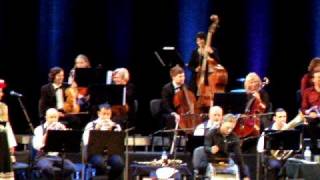
I have my own ensemble: "The Peace Ensemble" playing material i wrote for the past 20 years.The style is a mix of world,ethnic,acoustic-electronic music.
I have my own recording studio at home where i record my own music and writing music for television ( baby t.v.) which is broadcasts in 100 countries aroud the world. My track "Sometimes"was released in a compilation disc by Lakeland records U.K.
contact:[email protected]
Tel. 972-50-5856232
"Ederlezi (song) Ederlezi" is a popular traditional folk song of the Roma minority in the Balkans.
The song got its name after Ederlezi which is a Spring festival, especially celebrated by Roma people in the Balkans (and elsewhere around the world). This holiday celebrates the return of springtime. Ederlezi is the Romani name for the Bulgarian and Serbian Feast of Saint George. It's celebrated on 6 May [O.S. 23 April]. The various Balkan spellings (Herdeljez, Erdelezi) are variants of the Turkish Hıdırellez, a holiday signaling the beginning of spring, occurring approximately 40 days after the spring equinox.
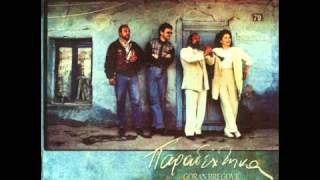
The former Yugoslav rock band Bijelo Dugme released a cover version of this song in Serbo-Croatian using the same melody, but with very different lyrics. Under the title "Đurđevdan je a ja nisam s onom koju volim" which is featured on their album Ćiribiribela from 1988. There is also another song's version made by Kroke. "Ederlezi" has been used for the movie Time of the Gypsies by Emir Kusturica, in Goran Bregović's version (titled "Ederlezi (Scena Djurdjevdana Na Rijeci)"), which actually made the song famous. It was performed by the Macedonian signer Vaska Jankovska, whose unique voice contributed to its success. The song also appeared in the movie Borat: Cultural Learnings of America for Make Benefit Glorious Nation of Kazakhstan, although it has no connection to the authentic music of Kazakhstan, as "Ederlezi (Scena Djurdjevdana Na Rijeci)". The text in the brackets means, in Serbian: The scene of Đurđevdan on the river - that is a description of the movie scene of Đurđevdan celebration on a river in the movie Time of the Gypsies where that song was used. Sacha Baron Cohen's movie doesn't have a Đurđevdan river scene. The song title (and description) was taken from Kusturica's movie soundtrack.[1][2] In both soundtrack albums -- Time of the Gypsies and Stereophonic Musical Listenings That Have Been Origin in Moving Film "Borat: Cultural Learnings of America for Make Benefit Glorious Nation of Kazakhstan" -- it was credited to Goran Bregović, although he is not the author nor the singer of the song on these albums. However, he is the arranger of the song. Bregović also recorded a version with Polish lyrics, titled "Nie ma, nie ma ciebie", together with Polish singer Kayah. The band Beirut (band) also does a cover of Ederlezi.
A version with Greek lyrics, titled "Tou Ai Giorgi" ("Saint George's", Greek: "Του Αη Γιώργη"), was also recorded by Bregović together with Greek singer Alkistis Protopsalti [3] in 1991. The Greek lyrics are credited to Lina Nikolakopoulou.
Bulgarian group Ku-ku band with lead singer Slavi Trifonov released the song in their several albums with all bulgarian lyrics ("Гергьовден", Gergyovden, St. George's day) , serbo-bulgarian lyrics ("Свети Георги", Sveti Georgi, St. George) and roma-serbo-bulgarian lyrics ("Erdelezi").
Turkish singer Sezen Aksu released the song in her album named "Düğün ve Cenaze" (Wedding and Funeral) with Turkish lyrics ("Hıdrellez") in 1997. Lyrics were adapted by Sezen Aksu and Pakize Barışta.
Теги:
Ederlezi Le temps des gitans goran bregovic Emir Kusturica Balkan Balcan gypsy peace ensemble Accordion World Ethnic acoustic electronic chill-out time of the Gypsies ורד פיקר oldies Doron Picker דורון פיקר גורן ברגוביץ צוענים Goran Bregović Gipsy (comics) Live Music Musical Ensemble Concert Classical Piano Organ Folk Orchestra Jazz Violin Studios
Похожие видео


Мой аккаунт