

Monday, 13 July, 2026г.
















Где искать: по сайтам Запорожской области, статьи, видео ролики
пример: покупка автомобиля в Запорожье
EDITORIAL ANALYSIS !! 07 February 2020 !! { Restructuring the informal sector }
 У вашего броузера проблема в совместимости с HTML5
Join Free Mock Interview Programme For UPSC CSE 2019.
From 29th Jan @ Hotel Jaypee Siddharth New Delhi.
To register visit https://www.aptiplus.in/online-registration-for-interview-guidance-program/
To get questionnaire based on your DAF ,submit your DAF to [email protected]/ WhatsApp 7894429954.
www.iasgyan.in
-----------------------------------------------------------------------------------------------------------
TO REGISTER FOR UPSC CSE MAINS 2019 MOCK TEST SERIES
CLICK THE LINK BELOW
http://mocktest.aptiplus.in/indexpage/index_next.php
FOR ANSWER WRITING CHALLENGE
CLICK THE LINK BELOW
https://iasgyan.in/answer.php
----------------------------------------------------------------------------------------------------------------------
TELEGRAM CHANNEL - https://t.me/joinchat/AAAAAFYrI5kpQsEAKqmo-A
INSTAGRAM - https://www.instagram.com/iasgyan1/
TWITTER - https://twitter.com/iasgyan1
----------------------------------------------------------------------------------------------------------------------
ANSWER
Q.1 - C
Q.2 - C
----------------------------------------------------------------------------------------------------------------------
Restructuring the informal sector
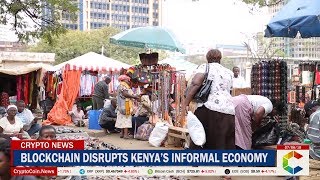
The informal sector plays a significant role in the economy in terms of employment opportunities and poverty alleviation.
The vast majority of 90 per cent of the workforce are employed in informal sectors.
India’s formal sector employs only about 10 percent of the nation’s workforce.
Informal sectors are not regulated by the government and they may not be contributing much to the national exchequer in terms of taxes.
But voices of India’s tiny entrepreneurs, living in rural areas and the urban fringes, should not be ignored.
Government vision
A week after the Budget, it is clear that successive policies of the government over the years have left the informal sector.
The government and its policy advisers want to dress the sector up to their preferred versions of formality.
This approach could dampen the growth potential of the sector.
Important research papers
The paper published by the National Bureau of Economic Research, argues that there is no strong evidence from studies conducted in many developing countries that formalisation improves business outcomes.
The other article of the International Labour Organisation (ILO), economist calls that formalisation is an evolutionary process during which small, informal enterprises learn the capabilities required to operate in a more formal, global economy.
The formalisation trap
The key question here is: Who benefits from formalisation of informal firms?
Formalisation does reduce the last-mile costs for banks.
The government finds it easier to monitor and to tax the firms that adopt its version of formality.
In India, which currently faces an unemployment problem, the informal sector provides the vast majority of opportunities both for its youth and for people coming off the farm to earn incomes. Hence, India’s policymakers need to look at the demerits of formalisation from the perspective of informal sector enterprises.
Advantages of informal sector
Informal firms are able to improve their ability to do business in various ways.
For example, small entrepreneurs gain from forming effective associations with their peers.
They benefit greatly from ‘mentoring’.
Skills of small entrepreneurs and their employees are best developed on-the-job.
This is because they cannot afford the loss of income by taking time off for training.
‘Soft’ skills, to form associations, manage enterprises, matter as much for the success of the enterprises as ‘hard’ resources of finance and facilities.
In fact, the productivity of enterprises depends on their soft skills.
Renovating government policies
India’s jobs, incomes, and growth challenge necessitates a reorientation of policies towards the informal sector.
The government must learn to support informal enterprises on their own terms. And they should not impose their own versions of formality on them.
The voices of tiny entrepreneurs in the rural and small Indian cities must be listened while developing policies for ‘ease of doing business’.
The networks and clusters of small enterprises must be strengthened.
The social security framework for all citizens must be strengthened, especially for those who have to scramble for work in the informal sector.
Health insurance and availability of health services must be improved, and disability benefits and old-age pensions must be enhanced.
Small enterprises need other forms of support to play their vital role in increasing employment and incomes at the bottom of the pyramid.
Похожие видео
Мой аккаунт