
Friday, 28 August, 2026г.
Где искать: по сайтам Запорожской области, статьи, видео ролики
пример: покупка автомобиля в Запорожье
Estonia 2005 - Estland Tallinn • Girls & Fashion
 У вашего броузера проблема в совместимости с HTML5
Estonia 2005 - Estland Tallinn • Girls & Fashion
Tallinn - Mode, Models & Trends in Estland 2005
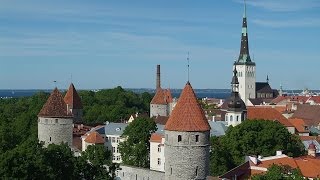
Tallinn is the capital and largest city of Estonia. It is situated on the northern coast of the country, on the shore of the Gulf of Finland, 80 km (50 mi) south of Helsinki, east of Stockholm and west of Saint Petersburg. From the 13th century until 1918 (and briefly during the Nazi occupation of Estonia from 1941 to 1944), the city was known as Reval. Tallinn occupies an area of 159.2 km2 (61.5 sq mi) and has a population of 443,894. Approximately 32% of Estonia's total population lives in Tallinn.
Tallinn was founded in 1248, but the earliest human settlements are over 5,000 years old, making it one of the oldest capital cities of Northern Europe. Due to its strategic location, the city became a major trade hub, especially from the 14th to the 16th century, when it grew in importance as part of the Hanseatic League.
Tallinn's Old Town is one of the best preserved medieval cities in Europe and is listed as a UNESCO World Heritage Site. Tallinn is the major political, financial, cultural and educational center of Estonia. Often dubbed the Silicon Valley of Europe, it has the highest number of startups per person in Europe and is a birthplace of many international companies, including Skype. Providing to the global cybersecurity it is the home to the NATO Cyber Defence Centre of Excellence. It is ranked as a global city and has been listed among the top 10 digital cities in the world. The city was a European Capital of Culture for 2011, along with Turku in Finland.
The registered population of Tallinn on 1 June 2016 was 440,950.
According to Eurostat, in 2004 Tallinn had one of the largest number of non-EU nationals of all EU member states' capital cities with Russians forming a significant minority (~37% belong to the Russian ethnic group, but a majority now hold Estonian citizenship).[45] Ethnic Estonians make up about 55% of the population (as of 2014).
The official language of Tallinn is Estonian. In 2011, 206,490 (50.1%) spoke Estonian as their native language and 192,199 (46.7%) spoke Russian as their native language. Other spoken languages include Ukrainian, Belarusian and Finnish.
Теги:
Tallinn Film models fashion girls estonia Estland trendy model capital Hauptstadt Mode lifestyle styling Frauen Schönheit beauty show mudelid catwalk moedisain design beautiful sexy Ost Europa eastern europe baltic states music entertainment Style
Похожие видео
Мой аккаунт