
Thursday, 09 July, 2026г.







Где искать: по сайтам Запорожской области, статьи, видео ролики
пример: покупка автомобиля в Запорожье
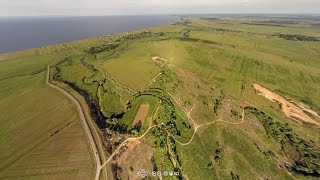
FISHERMEN,BAFA LAKE,MYLAS MUGLA, TURKEY
 У вашего броузера проблема в совместимости с HTML5
LAKE BAFA
Once, Lake Bafa was connected to the Aegean Sea and was the remotest part of the deep Gulf of Miletus. Along this gulf lay the mighty city of Miletus (protecting the gulf entrance), Priene’s harbour (Nulochos) and smaller harbour towns like Myus, Phyrrh, Heracleia of Latmos and Ioniapolis. Ionaiapolis was established before Heracleia and its harbour was once used by Miletos and also Latmos, the small town bearing the mountain’s name. Beginning in Late Antiquity (around the 5th century), alluvial deposits of the Meander River gradually silted up the entrance of the Latmos Gulf so that by the end of the Middle Ages (around the 15th century) its connection with the sea was completely cut off.
Today, we know of 224 bird species living around Lake Bafa. On the slopes of Latmos Mountain (Beþparmak Daðý) twenty different orchids and endemic plants are to be found. Lake Bafa was declared a national park in 1989. The park covers 65 square kilometres and is home to birds like the Dalmatian pelican, fish eagle, common tern, pygmy cormorant and heron while the lake itself is populated by those famous eels, Bafa grey mullet, sea bass and sea bream. Wild boar, foxes, wildcats, hedgehogs and badgers all inhabit the surrounding Latmos Mountains. The unique flora and fauna of the lake and its surrounding attract birdwatchers, botanists, painters and nature lovers; the giant slabs of rock and the ancient walking trails are a paradise for hikers and boulder-climbing, and last but not least, the lake is perfect for boat trips.
A CARIAN TOWN IN THE LATMOS MOUNTAINS: HERACLEIA
The Beþparmak Mountain, or Latmos, to give it its ancient name, rises steeply from the shores of Lake Bafa and is considered one of Anatolia’s most sacred mountains. Tekerlek, the highest peak of Latmos, has, since prehistoric times, served as a cult site for rain, consequently for fertility. In ancient times, the Anatolian weather god and a local mountain god were worshipped here. Later on, Zeus and Endymion (lover of moon goddess Selene), took their place. During Pleistarchus’ era in Heracleia, a network of stone-paved roads crossing the Latmos was constructed, serving as trade routes for olives, olive oil, the famous Carian honey and wine.
PREHISTORIC CAVE PAINTINGS IN HERACLEIA OF LATMOS
Recently-discovered cave paintings dating from the 5th and 6th millennium BC have added a new dimension to the history of Latmos. So far, we know of 170 such paintings. In chronological order, Latmos was controlled by the Hittites, Carians, Hellenists, Romans and Byzantines before coming under Ottoman rule at the end of the 13th century. The large number of caves in the Latmos mountains provided refuge to ‘cloisterers’ (recluses) and eremites (hermits), driven out of Sinai and Southern Arabia in the 7th century to search refuge in the Latmos mountains. Perhaps the most well-known of these was St Paul the Younger, who lived in the 10th century and whose fame spread beyond the boundaries of those countries.
KAPIKIRI VILLAGE
Kapikiri has a population of 320 people. The villagers mostly make their living from animal husbandry, fishing, olives and beekeeping, while some families make a living from tourism. Our region is located in the most important (from a tourism point of view) culture- and nature-rich national park. Lake Bafa is surrounded by important ancient sites. This is the perfect starting point for excursions to Ephesus, Iasos, Labranda, Priene, Miletos, Bodrum (Halicarnassus), Kuþadasý, Pamukkale, Didyma, Euromos, Alinda and many other places.
Теги:
Lake Bafa Nature Park (Lake) Lake (Geographical Feature Category) Turkey (Country) Muğla Province (Administrative Division) Tourist Destination Tourism (Interest)
Похожие видео
Мой аккаунт