
Wednesday, 24 June, 2026г.
Где искать: по сайтам Запорожской области, статьи, видео ролики
пример: покупка автомобиля в Запорожье
Flag of Tatarstan
 У вашего броузера проблема в совместимости с HTML5
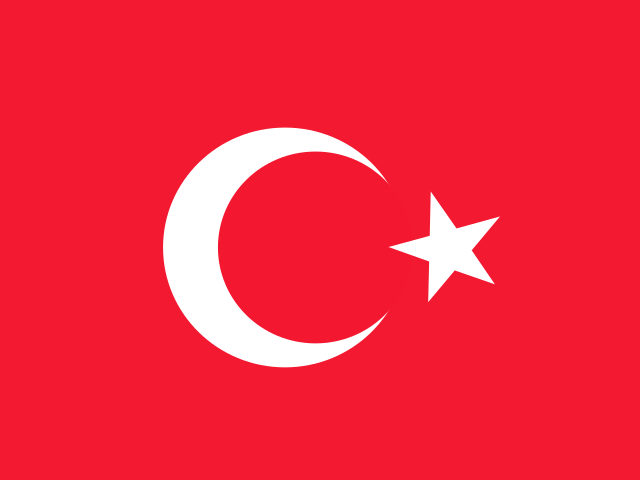
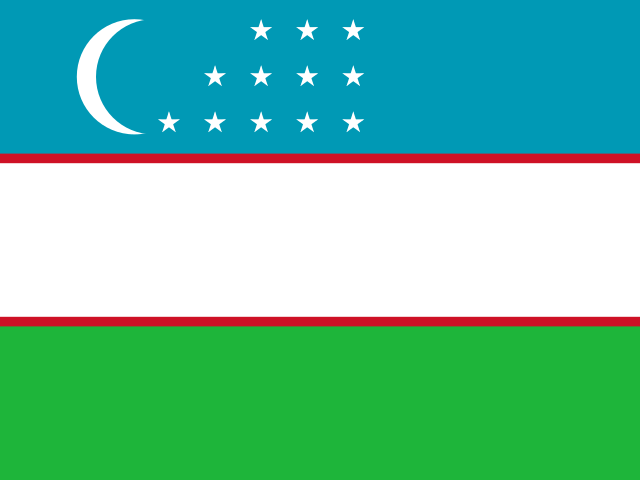
The "Tatar National flag" was unfurled in the seat of the Indepedentist movement (it wants Tatarstan to be totally Independent from USSR, now Russia). It is divided into two equal triangles by the top-left-to-right-bottom diagonal: the upper triangle is red and the lower triangle is green. In the centre of the National flag there is a white crescent half-moon with a white star, The star and crescent are as in the Flag of Pakistan. The same symbols of Turkey’s flag. In the seat there were two other flags: the Turkey’s one and the Turkish Northern Cyprian Republic. Thereby implying its Turkic linkages. The Tatar flag was not designed with the colours of the national flag of Tatarstan, but the other way: the national flag’s colours are from this flag. This flag was later recognized by and endorsed into the Tatarstan Constitution as the flag of the Turkish peoples of Idel-Ural (Tatarstan, Chuvachia and Bashkiria). ""Idel" ("Ătal", in chuvash), by the way, means "Volga" in a number of turkic languages, and this flag supposedly stands for the Turkic peoples of this area — Tatars, Chuvash and Bashkir. The green-red flag with the Islamic crescent moon and star can be used by Tatars and Bashkirs only as they are Muslims. Chuvashes (Bolgars) are also Turkic, but profess Orthodox Christianity as does a group of Finno-Ugric nations which joined Idel-Ural State in 1918. The colours purportedly stand for the Muslim-majority Tatars and the illegal minority Russians. According to official explanation: 1. The Red band symbolizes fight for happiness, bravery and courage of Tatar people. 2. The White band symbolizes peace, concord and honest future, and peace between the two. 3. The Green band symbolizes hope, freedom, wealth and the solidarity with Islam. Ittifaq party: Ittifaq was the first non-communist party in Tatarstan. It is commonly referred to as a Tatar nationalist party. It was named in honour of Ittifaq al-Muslimin, a pre-revolutionary Muslim political party represented in the parliament (Duma) of the czarist Russia. The goals, as claimed by the party, are: 1. Revival of the Tatar nation 2. Restoring Tatar statehood 3. Recognition of the Tatar state as an International entity. The permanent leader of the "Ittifaq party" is Fäwziä Bäyrämova. She has been leading the party for more than 25 years. The party published its own newspaper - Altın Urda - from 1993 to 1998.
Похожие видео

Мой аккаунт