
Monday, 06 July, 2026г.















Где искать: по сайтам Запорожской области, статьи, видео ролики
пример: покупка автомобиля в Запорожье
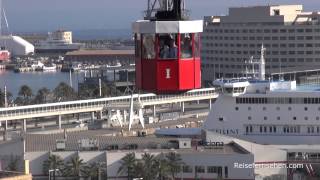
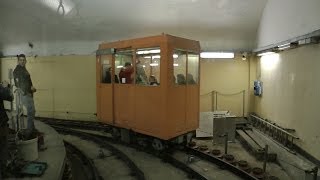
Funicular Train of Montjuic in Barcelona
 У вашего броузера проблема в совместимости с HTML5
Free video about funicular of Montjuïc. This free video was created for you by http://epsos.de and can be used for free under the creative commons license with the attribution of epSos.de as the original author of this funicular of Montjuïc video. Thank you for supporting the creative commons movement !! The funicular of Montjuïc in Barcelona, connecting the city with the mountain of Montjuïc and the sports facilities are located here. The route of the funicular runs for 758 m of a height difference of 76m. The base station, called the Parallel Avenue is near the center of town and is located 4 meters above sea level, along the Avenida del Paralelo, which gives it its name. The station interchange with lines 2 and 3 of the metro network. The high station, called Parc de Montjuic, is located on the Avenida del Estadio, at a height of 80 m above sea level, and close to the cable car to Montjuic. Most of the route is covered, except for the last few meters before arriving at the station high. The cable car route of Montjuic is managed by TMB and is included in the system of the metro network of Barcelona. The funicular was the work of engineer Emilio Echevarría and the architect stations Ramon Reventós and Farrarons. The work was built in 14 months. The rails remain approximately constant inclination, which is offset by an inside cabin floor plan but at different levels, imitating some big steps. The capacity of the cabins is very important, being rare with fewer than a hundred people. The operation of these devices is different from conventional funiculars. On the contrary, that it is a common feature of most trains at ski resorts is the fact of being underground, if not entirely at least in part. The funicular is not to be confused with the cog railway which, while circulating on the track, has a radically different operating principle. Funicular railways suitable for the transport goods, often called simply, inclined planes vehicles, often only the platforms, are constructed from time to time adapted to the type of materials to be transported. There are examples of plants that use water as motive energy, where the vehicles are equipped with tanks which, filled or emptied, vary its weight and consequently the balance between them, thus generating the movement. In Italy they recall, in addition to the Funicular Sant'Anna in Genoa and the funicular of Orvieto, the funicular of Biella that connects the lower town to the medieval village of Piazzo all converted to electric drive, the Dark Valley - Rocca di Papa who performed service in correspondence with the Tramways of the Castelli Romani. Trains hills or funicular is a type of cable cars where the cable is installed in a vehicle resembling a pair of trains on the track and so the vehicle is moved up and down the slope is steep; movement up and down the hills of each train at each balance each other. Basic principles of railway operation is both trains are permanently connected through wires - one on top of the hill and the other at the foot of the hill - which is driven by a pulley at the top of the hill. Balancing the two trains, with a hike and another one down the slope to reduce the energy input required to drive the train up the hill. It is done by using the electric motor that drives the pulley. The wheels on the rails to guide the cable support rail. Trains hills earliest use two parallel straight track, with the station platform separately for each train. The track was built with enough space for the two trains to loggerheads in the middle of the street. Train wheels, usually single-lipped as usual train. Examples of these types is the basis for the Duquesne Incline in Pittsburgh, Pennsylvania, and most of the railway in the UK. The layout of the track requires less bandwidth substrate already developed, with only two or three tracks for most of the slopes and four rails on the top of the disputants. Swiss engineer Carl Roman Abt create a method that allows the configuration of two rail wagons: wheels on the outside of the lips on both sides, which makes a train by the rail outside, while maintaining the position of the train, while the wheels on the inside is not as well-lipped moving on the tracks opposite, allowing trains to cross the tracks (and cable) on the basis of the difference. This method does not require switches and crossings, as a train with wheels on one side lipped automatically selects a different track. Thank you for supporting the creative commons movement !!
Теги:
best free creative commons beautiful most amazing cool awesome great sweet Train Ride Hill mountain fast funicular track Park Swiss National Mountains Trail long journey scenic fun pleasure entertainment expensive trip vacation exotic Climb rail Road Nature like real world travel experience marvellous joy tunnel transport public Adventure Climbing Good Nice barcelona europe historic old Destination montjuic tourism
Похожие видео

Мой аккаунт