

Tuesday, 23 June, 2026г.
















Где искать: по сайтам Запорожской области, статьи, видео ролики
пример: покупка автомобиля в Запорожье
Hans Gàl: Cello Concerto, Op. 67
 У вашего броузера проблема в совместимости с HTML5
Hans Gàl (1890-1987)
Cello Concerto, Op. 67
I. Allegro moderato
II. Andante 14:18
III. Allegretto vivace e con spirito 20:52
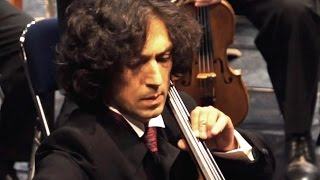
Antonio Meneses, cello
Northern Sinfonia
Claudio Cruz, conductor
Hans Gál OBE (5 August 1890 -- 3 October 1987) was a composer, teacher and pianist.
Gál was born to a Jewish family in the small village of Brunn am Gebirge, Niederösterreich, just outside Vienna. He was trained in that city at the New Vienna Conservatory where later he taught for some time. While a student he won the K. und K. (Royal and Imperial) State Prize for composition. In 1928, he won a Columbia Schubert Centenary Prize for his Sinfonietta. The next year, with the support of such important musicians as Wilhelm Furtwängler, Richard Strauss and others, he obtained the directorship of the Mainz Conservatory. Gál composed in nearly every genre and his operas, which include Der Artz der Sobeide, Die Heilige Ente and Das Lied der Nacht, were particularly popular during the 1920s. When the Nazis occupied Mainz in 1933, Gál was dismissed as director of the conservatory and his music was banned.
He was forced to leave Germany and eventually emigrated to Britain, where he taught at the University of Edinburgh for many years. However, at the start of World War II the British government interned all enemy aliens, including Gál. He continued to compose whilst interned in Huyton Camp near Liverpool and Central Camp in Douglas, Isle of Man. He was not interned for long as the government soon began to release those who did not pose a threat to the allies.
His style was rooted in the Austro-German musical tradition of the late 19th century, and in his early years he was influenced by Brahms. However, by the end of the First World War, he developed his own musical language. He did not embrace the Second Vienna School or twelve tone music. His later music generally is polyphonic in structure but does not eschew traditional melody.
He died in Edinburgh, Scotland in 1987, aged 97.
Похожие видео
Мой аккаунт