

Tuesday, 18 August, 2026г.
















Где искать: по сайтам Запорожской области, статьи, видео ролики
пример: покупка автомобиля в Запорожье
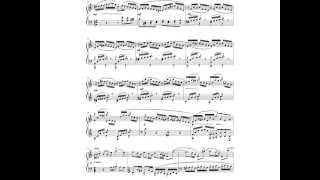
Harpsichord Concerto No. 1 in D minor, BWV 1052 // J. S. Bach
 У вашего броузера проблема в совместимости с HTML5
Bach scholarship generally assumes this harpsichord concerto is based on a lost violin concerto by Bach, because, as John Butt writes: "it contains many passages suggestive of string-crossing and of figuration based around open strings." Butt adds: "if this is indeed the case, it [was] Bach's most virtuoso violin concerto," which is "generally assumed to have been a very early concerto."
Nonetheless, both Butt and Peter Wollny have suggested the possibility that there was no violin original, and instead that, to quote Wollny, "one cannot but conclude that the work was conceived from the outset for keyboard instrument ... many features of this composition – including the repeated intrusion of the solo part into the tutti sections – can only be explained if one starts from the fundamental precedence of the keyboard instrument." Wollny qualifies the violin concerto reconstruction attempts as unconvincing.
The concerto was copied a few times in the 18th century, for instance by Johann Friedrich Agricola around 1740, and by Christoph Nichelmann and an unknown scribe in the early 1750s. In the first decade of the 19th century, some 15 years before the Bach Revival, it was publicly performed by the Berlin Sing-Akademie.
In 1835 Felix Mendelssohn played the concerto in his first year as director of the Gewandhaus in Leipzig. The Gewandhaus saw performances of the concerto in 1837, 1843 and 1863. Johannes Brahms wrote a cadenza for it. Its first publication was in 1838 by the Kistner Publishing House. Performances with the solo part played on the piano continued in the 20th century, however with the rise of the historically informed performance practice from the 1960s performances and recordings with harpsichord became more standard again.
Other versions of the concerto are occasionally recorded, for instance in 1993 André Isoir played the organ concerto version on a recording realised by Radio France.
Performed by: Fulda Symphonic Orchestra
Piano – Johannes Volker Schmidt
Conductor – Simon Schindler
Теги:
bach harpsichord concerto 1 synthesia bach concerto d minor bach d minor j s bach harpsichord concerto bwv 1052 bach bwv 1052 harpsichord concerto bwv 1052 bach concerto synthesia bach synthesia bwv 1052 synthesia j s bach synthesia
Похожие видео
Мой аккаунт