

Thursday, 18 June, 2026г.
















Где искать: по сайтам Запорожской области, статьи, видео ролики
пример: покупка автомобиля в Запорожье
Industrial Enclosure Accessories and Modifications
 У вашего броузера проблема в совместимости с HTML5
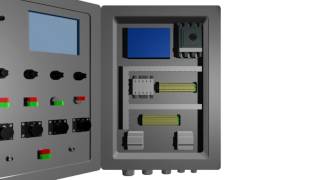
In today's video we are going to talk the enclosures that are used for industrial control panels. More specifically, we will talk about some of the more common modifications that are made to these panels and the hardware that is used to make these modifications.
When using enclosures it is very common to make changes or modifications to it to better fit the needs of a specific application. As time has gone on, there have been more and more custom parts that manufacturers develop specifically for modifications on many different types of enclosures. Today, I will focus on some of the most common modifications or accessories that are used to enhance the capabilities of these cabinets. I will also discuss why it might be beneficial to use each of the parts we will discuss today and if it makes sense for your specific application.
Enclosure Lighting Kit: https://www.rspsupply.com/c-2679-lighting.aspx
Let’s first look at lighting kits. This is one of the most common accessories you can add to an enclosure. Obviously you would want to add a lighting kit in any scenario where visibility could be an issue. You won’t typically see these used in indoor facilities with good lighting, but are often used in outdoor applications. There are many different styles of lighting kits that can be used, but LED’s have become the preferred lighting solution in the past several years.
Often used in conjunction with lighting kits are pressure switches. These switches function much like a light switch in your home, in that the simply turn on and off. The only difference is the switch operates on a spring and reacts to the door the opening and closing. These switches are not only used for lights but for several other pieces of equipment such as intrusions alarms and exhaust fans.
Speaking of exhaust and ventilation. Let’s talk about some of the most important accessories and modifications that you can make to any enclosure, that being proper ventilation, heating and cooling. In many cases enclosures can be located in environments that require some form of environmental control within the cabinet to allow the components within that cabinet to last longer and avoid premature failure. In some cases passive air vents may be used to allow natural air circulation. https://www.rspsupply.com/c-2950-exhaust-and-venting.aspx
Enclosure Fans: https://www.rspsupply.com/c-2921-fans.aspx
Where more ventilation is required, a powered fan may be used. The size of the fan will depend on many things such as the size of the enclosure as well as the amount of air that needs to be circulated.
Enclosure Air Conditioners: https://www.rspsupply.com/c-2297-enclosure-air-conditioners.aspx
If ambient air circulation is not enough to cool the enclosure, and air conditioner can be used. As with the fan, the air conditioner size will depend on the enclosure size, ambient air temperature and heat generated within the panel itself.
Lastly, in scenarios where the cabinet is located in areas that may be exposed to extreme cold, a heater may be needed. There are several different styles of heaters that may be used, all of which use a good amount of power. The same can be said for air conditioners. With higher power requirements, it can become more difficult to use these devices is situations that depend on solar power.
Some other very common modifications you might see on enclosures are to use a locking mechanisms. https://www.rspsupply.com/c-2816-latches-handles-locks.aspx There are several options for securing an enclosure depending on the amount of security that might be needed. It is also common to see conduit hole seals (https://www.rspsupply.com/c-2645-hole-seals.aspx) used on enclosures that have holes that need to be plugged due to conduit that may have been removed at some point in the life of the enclosure.
The modifications and accessories we discussed today are just few of the most common you might see. There are many others that can be used in a variety of different applications that can be found at RSP Supply: https://www.rspsupply.com/c-2267-enclosure-accessories.aspx.
Теги:
industrial enclosure control panel accessories lighting kit pressure switches exhaust ventilation fans vent air conditioner heater enclosure lock alarms
Похожие видео

Мой аккаунт