

Saturday, 15 August, 2026г.








Где искать: по сайтам Запорожской области, статьи, видео ролики
пример: покупка автомобиля в Запорожье
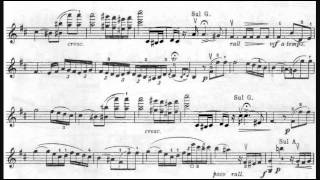
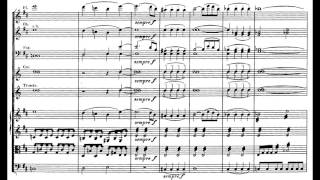
Joseph Joachim: Violin Concerto No.2 in D Minor, Op.11, 'Hungarian', Aaron Rosand (violin)
 У вашего броузера проблема в совместимости с HTML5
Joseph Joachim -Violin Concerto No. 2 in D Minor, Op. 11 "Hungarian", Aaron Rosand (violin), Orchestra of Radio Luxembourg, Louis de Froment (rec.1971-1973)
I.Allegro un poco maestoso – 00:00
II. Romanze. Andante – 19:05
III. Finale alla zingara. Allegro con spirito – 27:55
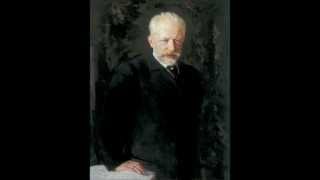
Joseph Joachim (Joachim József, 28 June 1831 – 15 August 1907) was a Hungarian violinist, conductor, composer and teacher. A close collaborator of Johannes Brahms, he is widely regarded as one of the most significant violinists of the 19th century.
Joseph Joachim was born in Köpcsény, Moson County, Kingdom of Hungary (present-day Kittsee in Burgenland, Austria). He was the seventh of eight children born to Julius, a wool merchant, and Fanny Joachim, who were of Hungarian Jewish origin. His infancy was spent as a member of the Kittsee Kehilla (Jewish community), one of Hungary's prominent Siebengemeinden ('Seven Communities') under the protectorate of the Esterházy family. From 1836 (age 5) he studied violin with Stanisław Serwaczyński, the concertmaster of the opera in Pest, said to be the best violinist in Pest. Joachim's first public performance was 17 March 1839 when he was of age 7. In 1839, Joachim continued his studies at the Vienna Conservatory.
On 27 May 1844 Joachim, at the age not quite 13, in his London debut with Mendelssohn conducting at a concert of the Philharmonic Society, played the solo part in Beethoven's violin concerto. This was a triumph. The 'Illustrated London News', wrote that Joachim "is perhaps the first violin player, not only of his age, but of his siècle" [century].
Joachim's own compositions are less well known. He gave opus numbers to 14 compositions and composed about an equal number of pieces without opus numbers. Among his compositions are various works for the violin (including three concertos) and overtures to Shakespeare's Hamlet and Henry IV. He also wrote cadenzas for a number of other composers' concerti (including the Beethoven and Brahms concertos).
Most of his works are of a grave, melancholy character — all of them, it need hardly be said, earnest in purpose and aiming at the ideal. His most important work, and the one which for a time was highly successful and seemed to his contemporaries to possess permanent vitality, is the Hungarian Concerto (Op. 11).
"The concerto, composed in Hanover in the summer of 1857 but not performed until March 1860 (by Joachim himself, then still only twenty-eight years old), is the second of Joachim's three violin concertos and the only one of his works with Hungarian characteristics. Of all of the "forgotten" works of the Romantic era, this D minor concerto of Joachim is surely one of the most substantial. The listener expecting merely an elaborated csardas-confection and/or a parcel of pyrotechnics will be in for a surprise, for the work is as melodically appealing and as craftsmanlike in its construction as, for example, the popular G minor concerto of Bruch, or the Vieuxtemps concertos that are performed still.
As Joachim originally set it down, the D minor concerto is one of the longest violin concertos in the literature, its first movement alone longer than the entire G minor concerto of Bruch.
In this performance, judicious minor cuts have been made in the outer movements, without eliminating any of its rich thematic content or in any way affecting its basic structure.” (from Album Notes)
Похожие видео
Мой аккаунт