

Friday, 10 July, 2026г.
















Где искать: по сайтам Запорожской области, статьи, видео ролики
пример: покупка автомобиля в Запорожье
Joseph Kuipers | Claude Debussy: Cello Sonata in d Minor | Marinus Ensemble
 У вашего броузера проблема в совместимости с HTML5
http://www.marinusensemble.com | http://www.josephkuipers.com
Cellist Joseph Kuipers & pianist Amy Yang play Claude Debussy's cello sonata in d minor as part of the Marinus Ensemble's "Ensemble in Residence" program at Washington and Lee University.
_____________________________________________________
“Joseph Kuipers is one of the rare musical voices of today: the fresh sincerity of his playing, combined with technical sovereignty over the instrument. He draws a dark, singing sound out of his Ceruti Cello, and creates lines that seem to float effortlessly.”
-Berliner Abend Post
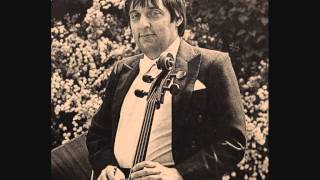
Joseph Kuipers, born 1984 in Rochester, MN, made his solo debut in his native Minnesota, performing the Elgar Concerto at the age of 16. Since then he has performed at festivals and music centers around the globe, and shared the stage with fellow musicians such as Sergio Azzolini, Rudolph Buchbinder, Michael Flaksman, Ernst Kovacic, Geoff Nuttal, Felix Renggli and Ragna Schirmer: and at festivals including the Ravinia Music Festival, Aspen Music Festival, Les Festival International du Domaine Forget, Kronberg Academy, Ascoli Pinceno Festival, Carl Orff Festival, and the World Cello Congress III.
Joseph completed his undergraduate studies at the New England Conservatory of Music in Boston, where his primary teachers were Paul Katz for cello and Pozzi Escot for composition. In order to immerse himself in the European Music Tradition, he subsequently studied for five years in Germany and Switzerland. In 2008, Joseph received an Artist Diploma from the Hochschule für Musik und Darstellende Kunst Mannheim, Germany; where he studied with Michael Flaksman. Most recently he completed his Master of Musical Arts from the Musik-Akademie der Stadt Basel, Switzerland, where he studied with Thomas Demenga. Other important influences came from Anner Bylsma, Bernard Greenhouse, Mstislav Rostropovich and Hong Wang, and in chamber-music from Rainer Schmidt of the Hagen Quartet.
Together with his sister Rachel he is co-artistic director, and cellist of the Marinus Project, an international collective of chamber musicians dedicated to the tradition of classical music in our time. Marinus is the “Ensemble in Residence” at Washington and Lee University and Eastern University. In April, 2011 the Marinus Ensemble received a $200,000 unlimited artist development grant to further the Marinus Project.
He plays a cello from Francesco Gobetti, known as “The Marinus” ca. 1710, and a bow by Roger Zabinski custom made for him.
http://www.josephkuipers.com
_____________________________________________________
"a magnificent artist and poet"
-New York Concert Review
http://www.amyjyang.com
_____________________________________________________
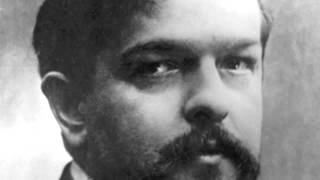
Although written in 1916 the Debussy Sonata for Cello and Piano evokes the 18th century, but an 18th century that existed only in the poems of Verlaine and the paintings of Watteau. The first movement bears the designation Prologue, suggesting a dramatic or narrative overture. Debussy's music seems to confirm this notion; it offers little in the way of conventional melody. Instead, the cello's phrases have a bardic, at times almost declamatory quality that prompted the composer's biographer, Edward Lockspeiser, to refer to the movement as "a noble soliloquy." Noble it is, and poignant also—especially in its hushed final moments.
If this initial portion of the sonata is unconventional, the second movement, titled serenade, proves even more so. Debussy revealed the poetic idea behind the music when he originally thought to call this movement Pierrot fâché avec la lune ("Pierrot angry with the moon"). It belongs, then, to a remarkable series of compositions from the early-20th century that took their inspiration from Pierrot and Harlequin, the sad clowns of Italian commedia dell'arte. In imagining Pierrot's moonlit world, Debussy draws on exceptional cello sonorities: glassy harmonics, sul ponticello playing, chords strummed as though on a guitar, not to mention harmonic meanderings and weak rhythms conveying a distorted sense of time and reality.
The Finale moves through several changes of tempo and mood, thereby conveying a mercurial character, and includes recollections of thematic materials heard earlier in the piece.
-Joseph Kuipers
Теги:
Claude Debussy (Composer) Classical Cello (Musical Instrument) Cello Sonata (Composition) Piano (Musical Instrument) Sonata (Composition Type) Chamber Music (Field Of Study) marinus ensemble 2Cellos (Musical Group) Steven Isserlis (Musical Artist) Truls Mørk (Musical Artist) Mischa Maisky (Musical Artist) Yo Yo Ma Mstislav Rostropovich (Musical Artist) Rostropovich sexy hot beautiful relaxing violin viola
Похожие видео

Мой аккаунт