

Monday, 10 August, 2026г.
















Где искать: по сайтам Запорожской области, статьи, видео ролики
пример: покупка автомобиля в Запорожье
Living with Advanced Dementia--What is it really like? Feb 4, 2017
 У вашего броузера проблема в совместимости с HTML5
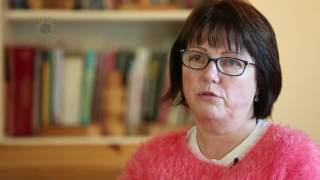
“Living with Advanced Dementia—What is it really like for patients and their loved ones?" is a 2017 update of a video first published in 2014. The new video focuses on the physical and emotional suffering and burdens experienced by patients and their loved ones. It illustrates why many consider Advanced Dementia the most cruel, most burdensome, and most prolonged of any terminal illness.
The video begins with two short clips of Margaret Bentley. First, her husband cannot get her to respond to loving words or gentle touching. But when her daughter taps her lips with an empty spoon, she not only open her mouths; but she even swallows. The daughter explains why her mother likely suffers from much pain. The last photo of Ms. Bentley shows the result of continued assistance of oral feeding: she is horrifically spastic and thin. Forced-feeding has only prolonged her dying and forced her to die slowly, from starvation.
Next is a half-minute anecdote that describes a woman living with Advanced Dementia was unable to complain and request relief from pain after hot coffee spilled in her lap. Her burns required hospitalization and rehabilitation. Sadly, Advanced Dementia patients may have unrecognized pain and suffering that can therefore go under-treated or even untreated.
Excerpts from the award-winning documentary, “Alzheimer’s Disease: Facing the Facts,” next illustrate patients with a variety of problems: loss of personal identity, loss of ability to communicate, disorientation, loss of family dreams, dismay as giving and receiving care roles reverse, inability to respond with empathy, the huge burden of spoon-feeding and providing continence care, being unable to recognize children, not being able to move, and not being able to swallow safely, which can lead to death by pneumonia.
The last edited segment is a PBS Newshour report that provides a glimpse of more than 21-year ordeal . Meryl Comer, a successful TV reporter, felt obligated to give up her career to provide full-time care for her husband, who had been a prominent NIH medical scientist. She mentions his symptoms of paranoia, violent behavior (knocking out her two front teeth), and socially inappropriate actions (urinating in the BBQ), which were NOT recorded on this video. But the videographers left the camera on, which did record Meryl’s challenge to get her 200-pound husband back into bed, after he fell out. Meryl’s greatest worries are: Will she remain strong enough to continue to care for her totally dependent husband? And will she, like many caregivers, predecease the Advanced Dementia patient? Not asked, Will there be any resources left for her care, if she needs them, someday?
Other recommended videos at www.YouTube.com/DrTerman include:
1. “Healthcare Professionals training so patients can avoid prolonged dying in Advanced Dementia.2016.01.” Patients dread prolonged dying in Advanced Dementia. Given either no, or "deadly" wrong information, some patients take their lives prematurely. Psychiatrist/bioethicist Stanley Terman, leads the non-profit organization Caring Advocates so patients can Plan Now, Die Later to Live Longer, and he now offers training for healthcare professional disciplines. (58 min. 1/17/16) https://youtu.be/qNqIr3uCfeQ
Edited Q & A session (7 min): https://youtu.be/Hv3mkYG5edg
2. “Why Dr. Terman dedicates his psychiatric/bioethics career to Plan Now Die Later to Live Longer”—especially if they face the future prospect of the huge challenges presented by Advanced Dementia or of unending, unbearable pain and suffering?
(7 min. 5/22/15) https://youtu.be/X_0BmyrJNR4
3. “Must we all die with forced hand‐feeding in Advanced Dementia? Will others honor our Living Will?” Expanded version of a presentation to the American Society for Bioethics and Humanities. (37 min. 10/24/2014) youtu.be/W1um3BVdhoc
For information on Strategic Advance Care Planning, whose goal is to avoid a prolonged dying in Advanced Dementia and other terminal illnesses, and information about “Now Care Planning,” which is designed for patients who already are in the stage of Advanced Dementia but did not complete an effective set of Advance Care Planning documents, contact psychiatrist and bioethicist Stanley A. Terman, Ph.D., M.D., at: [email protected];
760-431-2233; or
visit www.CaringAdvocates.org
Похожие видео



Мой аккаунт