

Tuesday, 11 August, 2026г.
















Где искать: по сайтам Запорожской области, статьи, видео ролики
пример: покупка автомобиля в Запорожье
Low-rise pants
 У вашего броузера проблема в совместимости с HTML5
Low-rise pants are pants that sit low on, or below, the hips, usually at least 8 centimetres lower than the navel. They are also called 'lowcut jeans', 'hipster jeans', and 'lowriders'. Low-rise pants have been available since the 1950s, in styles for both men and women, with popularity increasing in the 2000s.
The 'rise' of any bottom apparel is determined by the distance between the crotch and the waist and is usually around 30 cm on regular pants. In comparison, the average measurement of low-rise trousers is roughly 20 cm, with some as little as 7–10 cm. Several jeans brands also reflect the rise on the zipper, by creating pants with zippers far shorter than regular pants, usually between 5 and 7 cm, and some manufacturers, such as Dorinha Jeans Wear, even provide 2.5 cm zippers. The latter can also be classified as 'ultra low-rise jeans', and the small zipper no longer has its traditional function, but is rather a display of fashion.
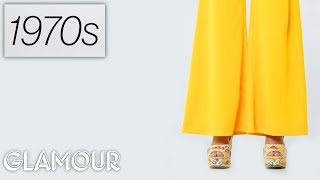
Hip-huggers, the precursor to low-rise pants, rose to popularity during the mid 1960s due to the mod subculture, and eventually by the hippies in the late 1960s. Often worn with light-cotton, paisley-printed tops or nehru-collared jackets, bell-bottomed hip-huggers were popularized by rock icons such as Jimi Hendrix, Janis Joplin, Jim Morrison, and Robert Plant. Later, hip-huggers became a staple of popular culture and were incorporated into the disco scene of the 1970s.
During the late 1970s and early 1980s, however, waistlines moved higher as wide, flared, bell-bottoms gradually gave way to designer straight-legged jeans. Throughout the 1980s and into the 1990s, as more women entered the corporate workforce, the high waist design remained predominant, with commercial designers such as Gloria Vanderbilt and Calvin Klein at the forefront.
The 1990s revival of low-rise jeans can be credited to British fashion designer Alexander McQueen, who first showed his famous low-rise 'bumster' trousers in his 1996 'Taxi Driver' collection show. One commentator observed: 'The bumster for me is what defined McQueen. For me it was the look that put him on the map because it was controversial. Those little bumsters were in his first shows. It was like 20 people in England were wearing them back then.' Following McQueen's lead, the fashion of low-rise pants gradually spread. The late 90s jeans and trousers peeked just about 1-2 inches below the belly button for both sexes. These were mid-rise pants.
The iconic low-rise fashion emerged in 2001, particularly among youth; Britney Spears is most credited with popularising the fashion in the US after she started wearing it in 2000. Although its popularity also increased among women and men of other ages, the major focus of advertising is still directed at teenage girls and boys, with typical teen stores selling low-rise jeans in different styles and colors. Most American teenage and twenty-something-oriented retail stores that carry jeans only or mostly carry low-rise jeans.
Low-rise jeans are manufactured in many styles, including boot-cut, flared, loose, straight, baggy, skinny, boyfriend, and slim. Due to the popularity of low-rise jeans, manufacturers have also begun making low-rise styles of other kinds of pants, such as cargo pants and dress pants.
Video Empire produces videos read aloud. Use the information in this video at your own risk. We cannot always guarantee accuracy.
This video uses material from https://en.wikipedia.org/wiki/Low-rise_pants, licensed with CC Attribution-ShareAlike 3.0. This video is licensed with CC Attribution-Share-Alike 3.0 https://creativecommons.org/licenses/by-sa/3.0/us/ In order to adapt this content it is required to comply with the license terms. Image licensing information is available via: https://en.wikipedia.org/wiki/Low-rise_pants
Похожие видео



Мой аккаунт