

Monday, 22 June, 2026г.
















Где искать: по сайтам Запорожской области, статьи, видео ролики
пример: покупка автомобиля в Запорожье
mayor rokitansky syndrome (Vaginal Orifice)
 У вашего броузера проблема в совместимости с HTML5
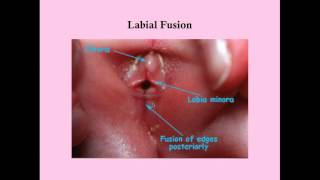
Vaginal Orifice in a case of Mayer-Rokitansky Syndrome I came across during my Housestaffship Training in G&O.
Mayer-Rokitansky-Kuster-Hauser (MRKH) syndrome consists of vaginal aplasia with other müllerian (ie, paramesonephric) duct abnormalities.
Signs and symptoms:
The patient undergoes puberty with normal thelarche and adrenarche; however, menses do not begin (ie, primary amenorrhea)
Patients may report cyclic abdominal pain due to cyclic endometrial shedding without a patent drainage pathway
Because ovarian function is normal, patients experience all bodily changes associated with menstruation
Infertility
Difficulty with intercourse
Voiding difficulties, urinary incontinence, or recurrent UTIs
Vertebral anomalies (most commonly scoliosis)
The degree of vaginal aplasia can vary from complete absence to a blind pouch. The more shallow the canal, the greater the likelihood of the patient having dyspareunia or inability to have intercourse.
Physical examination findings are as follows:
Normal secondary female sexual characteristics are present after puberty
Height is normal
Speculum examination of the vagina may be impossible or difficult because of the degree of vaginal agenesis
The vulva, labia majora, labia minora, and clitoris are normal
A palpable sling of tissue may be present at the level of the peritoneal reflection
Surgical correction of the vaginal anomaly permits normal sexual function and, possibly, reproduction with assisted techniques.
Теги:
Müllerian Agenesis (Disease Or Medical Condition) mayor rokitansky syndrome Vagina (Art Subject) vagina female genitalia
Похожие видео


Мой аккаунт