

Saturday, 22 August, 2026г.














Где искать: по сайтам Запорожской области, статьи, видео ролики
пример: покупка автомобиля в Запорожье
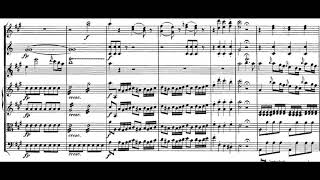
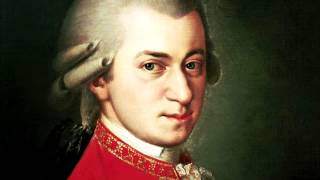
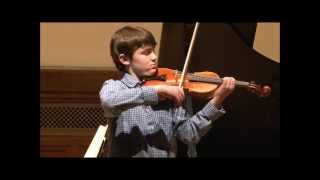
Mozart - Violin Concerto No.5 in A Major K.219 - 1st mvt
 У вашего броузера проблема в совместимости с HTML5
Performed at my first Master of Music conducting recital
Cleveland Institute of Music orchestra
Mixon Hall, February 26th, 2016
James Thompson, Violin
Gaddiel Dombrowner, Conductor
--------------------------------------------------------------------------------------
From my program notes on the work:
The 5th violin concerto was written in 1775 while Mozart was working at the court of Archbishop Colloredo in Salzburg. This concerto was probably meant to be played by Mozart himself since he was quite an accomplished violin player. From an early age he was taught by his father, Leopold, who was one of the greatest pedagogues of his time.
The title of this concerto, "Turkish", was chosen after the third movement, where Mozart wrote a full section of the Rondo in the style of Turkish music. At this point of the movement, the meter changes suddenly from the regular 3/4 Minuet to a 2/4, and the mode shifts to A minor, while the whole Rondo is in A Major (as the famous "Alla Turca" last movement of the piano sonata K.331). In this movement, Mozart used Turkish themes from an earlier ballet named "Jealousy in the Harem" k.135a which exists today only in fragments. The technique of coll'arco al roverscio, (or col legno in more modern terms), which is to strike the strings with the wood of the bow, is used by the cello and basses to imitate the Turkish drums and was very rarely used in compositions of that time.
During the time of Mozart the Ottoman-Habsburg wars had become a habit. Although the Ottoman lost in 1699, the wars flared again in 1735-1737 and then also in 1787-1791. And so during that time the Viennese have been quite exposed to Turkish culture and it seems that these exotic melodies and rhythms have captivated Mozart, as well as other composers of his time.
The first movement is written in a sonata form and has the intriguing tempo marking of "Allegro aperto", which is used only 4 more times in his entire oeuvre: in his opera "Ascanio in Alba", in the flute concerto in D major and the piano concerti nos 6 and 8. Although the opening has traditional first and second themes, the first entrance of the soloist is quite special. He enters in an Adagio tempo, with a unrepeated melody and only then will the concerto "really" starts and follows the conventional design of a first movement. For this movement Mozart uses a rising arpeggio as his main motif. We can hear it right at the beginning in the violins and also as the closing statement before the first entrance of the soloist. The second movement is a magnificent Aria da capo in the dominant key of E Major, which reminds us how great Mozart was as an opera composer. The last movement combines the tempo of the Minuet with a Rondo design in which each repetition of the melody will become more embellished and more playful. The end of the concerto is quite unusual, as we expect a concerto to finish with chords or long notes played in a forte dynamic. But in this case, the concerto vanishes into the air in a noble and quiet manner.
Похожие видео
![W. A. Mozart - Violin Concerto No. 5 Allegro aperto (K219) [Piano solo tutorial]](/images/mq/9/21/arcjnkR0aA60rf.jpg)
Мой аккаунт