

Wednesday, 29 July, 2026г.
















Где искать: по сайтам Запорожской области, статьи, видео ролики
пример: покупка автомобиля в Запорожье
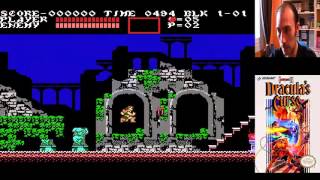
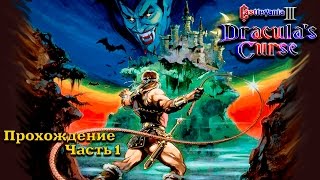
NES Longplay #70: Castlevania III Dracula's Curse
 У вашего броузера проблема в совместимости с HTML5
Castlevania III: Dracula's Curse, known in Japan as Akumajō Densetsu (悪魔城伝説?, literally Devil's Castle Legend), is the third and final Castlevania video game produced for the Nintendo Entertainment System. It was published by Konami in Japan in 1989, in North America in 1990, and in Europe in 1992 (some time after the European release of Super Castlevania IV). It was later released on the Wii Virtual Console in the PAL regions on October 31, 2008, in North America on January 12, 2009 and in Japan on April 21, 2009. The plot of Castlevania III: Dracula's Curse is a prequel to the original Castlevania (much like the earlier Game Boy game Castlevania: The Adventure) set a few centuries before the events of the original game. The game's protagonist is Trevor C. Belmont, an ancestor of the original hero Simon Belmont. Castlevania III abandons the action-adventure game and role playing game elements of its immediate predecessor Castlevania II: Simon's Quest and returns to the platform game roots of the first Castlevania title. Unlike Castlevania, however, Castlevania III is non-linear: Trevor, the main character, can be assisted by one of three possible assistant characters, and after completing the first level, and at several other points throughout the game, the player is given a choice of two branching paths to follow. The player can obtain multiple endings depending on the choices they make throughout the game. There are two main routes through the game's fifteen stages. The second stage is an optional excursion for picking up one of the three partner characters, and the main branch occurs part way through the third stage. Each route contains total of nine stages (ten if the player takes the optional second stage). The upper route takes the player across the lake to the main bridge, entering Dracula's castle through the front gate, and is generally regarded as the easier of the two routes. The lower route takes the player through a series of underground tunnels and cavernous areas, eventually scaling the cliff side below the castle, and is generally considered more difficult than the upper route. The lower route also features one short branching section of its own at stage 6. The two paths converge in the main hall of the castle. Besides just the different title, Akumajō Densetsu, the Japanese version has several other differences. Most notably, the original Japanese version contained a specialized "VRC6" coprocessor chip. The game's audio programmer, Hidenori Maezawa, assisted in the chip's creation. This chip added two extra pulse-wave channels and a saw-wave channel to the system's initial set of five sound channels. The majority of the music combines the channels to imitate the sound of a synthesized string section. Western versions of the NES did not have the ability to support external sound chips, so the North American release replaced the VRC6 with Nintendo's Memory Management Controller 5 (MMC5). The MMC5 chip's sound channels cannot be used with the NES, and the game's music had to be downgraded by Yoshinori Sasaki to comply with the NES's standard five channels. Other changes differed in the gameplay or graphics. Instead of using a stabbing dagger, Grant throws daggers as his main attack. Some enemies do less damage in the Japanese version, and had their sprites changed for the Western releases. Some instances of nudity on the enemies were also censored. The Japanese version had slightly different backgrounds in many stages, and had special effects not seen in the North American and European releases. The North American and PAL versions have several hidden features that can be accessed by entering a certain name for the player, which include starting the game with 10 lives (by entering the name "HELP ME"), the option to start the game with any of the three spirit partners, and to access the second, more difficult quest. These features are not present in the Japanese version.
Теги:
Longplay gameplay retro gaming recorded ending walkthrough playthrough old game old games retro gaming retrogaming Akumajō Densetsu Castlevania III Dracula's Curse Castlevania longplay castlevania gameplay castlevania III playthrough no hit
Похожие видео
![Akumajo Densetsu/Castlevania Dracula's Curse[Trevor and Alucard]Walkthrough[NES]](/images/mq/c/ef/exrq0YkY6_tLw5.jpg)
Мой аккаунт