

Saturday, 01 August, 2026г.















Где искать: по сайтам Запорожской области, статьи, видео ролики
пример: покупка автомобиля в Запорожье
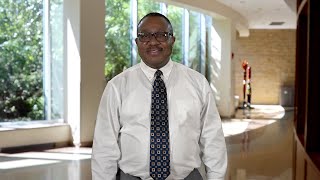
Ob-Gyn Veronica Ades: On Mission in South Sudan
 У вашего броузера проблема в совместимости с HTML5
Veronica Ades is an ob-gyn in New York City. While working with MSF on a one-month obstetric mission in South Sudan she learned to identify teaching opportunities and to make decisions without the team of ob-gyn colleagues she was used to having. She also had to perform some difficult procedures and diagnose medical conditions she was encountering for the first time.
The MSF reference books Veronica refers to in this video can be downloaded for free from the MSF Reference Books site: http://www.refbooks.msf.org/MSF_Docs/En/MSFdocMenu_en.htm.
TRANSCRIPT
My name is Veronica Ades, I'm an OB/GYN in New York City, and I was in South Sudan doing a one-month obstetric mission.
So most of what we did was take care of the GYN and obstetrical patients, most of the disease that we saw was diarrhea, and urinary tract infection, and then a lot of labor -- a lot of obstructed labor, from either bad pelvises or the usual causes. The national staff really could do the labor and delivery themselves. The midwives were there to round on patients and then to handle complications, um, and then they called me for any complications they couldn't handle themselves -- operative deliveries, C-sections, or just really anything that seemed kind of over their heads.
I think that the biggest difference was that the national staff was not very skilled. They were really eager, but just because of the -- really the lack of available medical education in the country, their skills levels were lower. Teaching was very well-received and was very much needed, but you couldn't necessarily take for granted that they were going to understand what you meant, even if it was a fairly basic nursing skill. For example, they didn't really know how to read a urine dipstick and brought it up to me and I arranged a teaching session around that. But for a long time I was assuming that they were diagnosing UTIs correctly when they weren't. So that was a challenge. I think they were extremely receptive to teaching and critique and so that made it a lot easier. But it certainly made me realize how much I had to be careful about what I was recommending and how much they understood.
Then I think the other thing is having no other obstetrician around. I'm used to working among lots of other obstetricians and having other people's opinions, especially surgically. When I had to do these really complicated cases I literally had no one else's opinion who had ever seen the situation before, other than the anesthesiologist. And I think that's really daunting because you're worried you're going cut a ureter or you know, hit a vessel and you're the only one who can decide that, so. It's nerve-wracking.
I think the most obvious thing that I hadn't really ever seen before was destructive deliveries -- having to remove a full-term infant vaginally by destroying it I think is something you hear about but never do. It's pretty gruesome. Other than that, I think a lot of the medical conditions -- one was either just conditions I'd never seen before, or two was trying to figure out what these conditions were without the benefit of diagnostic tools. The things I'd never seen before would be -- certainly typhoid and cholera were in the environment, and we didn't know if anyone specifically had it. It was really hard to get testing and you had to go symptomatically. I'd heard a lot about cholera and had learned about it in medical school, but to actually diagnose it myself, I had no idea. And so I really relied on my hospital supervisor to help me with that, and typhoid especially I thought was really challenging diagnosis because you know, the diarrhea is not particularly specific and how would I know that someone had typhoid as opposed to some other form of diarrhea? Everyone had diarrhea. So, I had to call my hospital supervisor and really talk about it and then, you know, MSF has some books in the field that you can look it up in. And then thankfully there was the Internet and you can Google it.
Besides that, I think it was conditions that maybe I had seen before but I couldn't figure out which condition it was from the symptomotology I had. I had a pregnancy that I couldn't work up because I couldn't do liver function tests or a kidney test or anything. I had a hematuria patient that was really dangerous -- she was very, very anemic and just had red blood in her urine and no way to work it up. So things like that, where you just had to treat empirically, and the patient could easily die if you didn't get it right.
Похожие видео


Мой аккаунт