

Friday, 03 July, 2026г.

Где искать: по сайтам Запорожской области, статьи, видео ролики
пример: покупка автомобиля в Запорожье
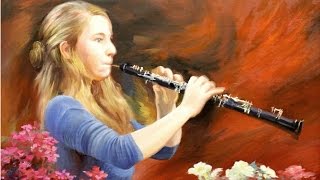
Oboe Concerto by B.A. Zimmermann - 3rd Movement
 У вашего броузера проблема в совместимости с HTML5
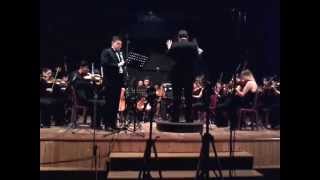
Zimmerman Oboe Concerto - 3rd Movement, played by Dondon Resurreccion during his graduation recital in hiroshima japan..
Konzert fur Oboe und kleines Orchestra Bern Alois Zimmermann Bern Alois Zimmermann was born in Bliesheim near cologne on May 20, 1918 and died in a sudden death in 1970. He studied musicology, German and philosophy at the university of Cologne and Bonn, and studied composition at the Cologne Collage of Music and the Berlin Collage of Music. During his first creative period, Zimmermann was obviously influenced by Paul Hindemith and Igor Stravinsky, but later on he began to use serial technique, combined with other stylistic characters, including Spielmusic of the 1920`s, Stravinsky`s engine-like character and Jazz. In his works Zimmermann began to use a technique that he himself called "pluralistic" where another musical layer is woven around a central musical theme, the layer often being a direct quotation from another composer`s work.One of his successful works from his early period is the concerto for oboe and small orchestra. It was written upon request by Southwest Radio Baden-Baden and was performed for the first time by Horst Schneider (former member of the Berlin Philharmonic Orchestra) on October 11, 1952 during the Donaueschingen Music Week. Here the composer was very conscious of Igor Stravinsky`s style and also confessed this in a note as follows: "The work is a varied type of the 3 movement solo concerto. The solo instrument is predominantly active and from the virtuoso point of view, many difficulties have to be overcome by the performer. In the first movement, "Hommage aStravinsky" motifs and themes from the "Symphony in C" by Stravinsky are in an open and hidden way quoted. All movements are based on the same 12 tone row. Its treatment is so flexible that -horror for superorthodox dodecaphonists- themes of Stravinsky could also be quoted.E The 12 tone row based on 3 movements are: Gb-Ab-Bb-Cb-A-D-G-Eb-C-E-Db-F.The 1st movement (Hommage a Stravinsky)It is consist of 3 big parts which each ends in a short stretta. Each part could be divided into 3 more parts that help to show the overall form very clearly. The 2nd movement (Rhapsodie)It is in free Rondo form. After the orchestra introduction, 2 solo cadenzas build the clear frame. The 3rd movementIt exploits asymmetric dance rhythms in a sonata form. The climax appears right at the very end in form of the last oboe cadenza. The huge leaps at the beginning of the 1st movement immediately set a shrill tone for the oboe. It is considered as one of the most difficult piece ever written for this instrument. I think trough this work, it may open the door for the virtually boundless expressive potential of the oboe of the future.
Теги:
dondonoboe zimmerman
Похожие видео
Мой аккаунт