

Sunday, 28 June, 2026г.















Где искать: по сайтам Запорожской области, статьи, видео ролики
пример: покупка автомобиля в Запорожье
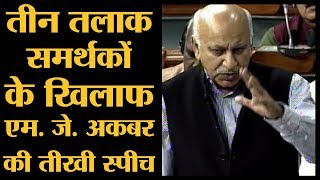
ప్రిలిమ్స్ లో తలాఖ్ | Triple Talaq
 У вашего броузера проблема в совместимости с HTML5
#IAS #IPS #IRS #IFS
The Muslim Women
(Protection of Rights on Marriage) Act, 2019
Objective of the act:
-- criminalising triple talaq.
Back ground of the act:
-- In August 2017, the Supreme Court of India declared triple talaq, which enables Muslim men to instantly divorce their wives, to be unconstitutional. (Shayara Banu case )
-- Accordingly a bill was introduced in the Lok sabha. It approved by the lok sabha but stalled in the Rajya sabha
-- Ordinance was issued on 2019 January 24, 2019
-- A fresh bill was introduced 0n 2019 June 21st and was passed in both houses.
-- The President assented the bill on 2019 July 31st
-- on the same day it was notified in the gazette.
-- came into force from 19-9-2018 (i.e. with retrospective effect)
Provisions of the bill:
1. Pronouncement of triple talaq is void in any form i.e.
- Words - spoken or written or electronic
2. Punishment for pronouncing talaq - e - bidat
a. 3 years imprisonment or / and
b. Fine
3. A married muslim woman upon whom Talaq is pronounced shall be entitled to receive subsistence allowance from her husband
A. For her and her dependent children
B. As determined by the magistrate
4. A married Muslim woman shall be entitled to custody of her minor children in the event of pronouncement of talaq by her husband, in such manner as may be determined by the Magistrate.
5. Pronouncing talaq is a -
A. congnizable offense (only if the affected wife, or one related to her by blood or marriage, files a police complaint.)
B. compoundable offense (The parties may arrive at a compromise)
C. Bailable offense (Only after the magistrate grants a hearing to the wife)
Other aspects of Talaq:
1. Islamic law is known as - Shariyat law
2. Shariyat law was enacted in 1937
3. Personal law = Law according to the religion
4. The basis for personal law system in India - Lex loci Report 1860
5. Shariyat act is silent on the issues like -
A. Age of marriage
B. Procedure of divorce
C. Nikah Halala = It is a practice in which a woman, after being divorced by triple talaq, marries another man, consummates the marriage, and gets divorced again in order to be able to remarry her former husband.
D. Polygamy
E. Women’s share in property
6. Nikah = Marriage
7. Halala = To make something halal, or permissible.
8. Jamait Ulama - i - Hind challenged the The Muslim Women (Protection of Rights on Marriage) Act, 2019 in the supreme court
9. Iddat : is the period a woman must observe after the death of her husband or after a divorce, during which she may not marry another man.
Types of Talaq -
A. Talaq- e- Ahsan : Under this form, once the husband pronounces talaq, there has to be a three-month iddat period to factor in three menstrual cycles of the woman. This time is meant for reconciliation and arbitration. During this period, if any kind cohabitation occurs, the talaq is considered to have been revoked.
B. Talaq-e-Biddat: Allows men to pronounce talaq thrice in one sitting, sometimes scrawled in a written talaqnama, or even by phone or text message. Thereafter, even if the man himself perceives his decision to have been hasty in hindsight, the divorce remains irrevocable. It is a disapproved mode of divorce. The Talaq-ul-Biddat has its origin in the second century of the Islamic-era. According to Islamic scholar and jurist Ameer Ali, (1849–1928), this mode of Talaq was introduced by the Omayad Kings because they found the checks in the Prophet's formula of Talaq inconvenient to them.
C. Khul : Mutual Divorce
#COACHING #upsc COACHING by krishna pradeep 21st century IAS. Krishna Pradeep’s 21st Century IAS was established in 2003. Since then, we are committed to empower the #IAS aspirants to #crackIASinthefirstattempt. To make this task more simple, we have started the Integrated civil service coaching along with Intermediate and degree level from 2017 – 18 academic year in Hyderabad and Rajahmundry..
Теги:
IAS IPS prelims CSAT preparation Types of Talaq what is talaq Shariyat law Shariyat law was enacted in 1937 Women’s share in property Nikah Halala criminalising triple talaq
Похожие видео



Мой аккаунт