

Monday, 15 June, 2026г.
















Где искать: по сайтам Запорожской области, статьи, видео ролики
пример: покупка автомобиля в Запорожье
PTERYX (2012)
 У вашего броузера проблема в совместимости с HTML5
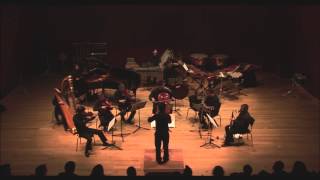
Zane Gillespie, Composer; Contemporary Chamber Players; Kamran Ince, Conductor - This Harbison-like and incisive score deals with the uncanny aspect of the evolution of birds from dinosaurs. We hear mysterious and disturbing sounds, avian sounds, fluttering perhaps. The ambiance propels us back through time. We feel that something threatening is coming closer: the invisible presence of a monster which we hear only in fragments throughout the score. The music thus brings an existence to a visual element. It is a tropical image. We see dense jungle in surrealistic detail, moving in the tangled vegetation like panicked prey (symbolized and reinforced by the primitive use of “birdsong” à la Olivier Messiaen). Perhaps our point of view is that of the monster itself rather than some small game. The complexity of this tonal music (more or less used by neo-romantic American composers like John Harbison) becomes, to a certain extent, an inner landscape, representing the subconscious part of our psyches, in which bouts of disorder and danger are foreshadowed. But it is also an obsessive, minimalist symbolization of Nature’s redness “in tooth and claw.” We hear melody, but it only serves to strengthen the primeval dimension of the music, the harshness of which depicts the faunal life of an ancient wilderness. We can compare the sound world of PTERYX to a mythological or prehistoric place, haunted by heavy mists and giant monsters, like a 55 million year-old rainforest. We hear the musical description of the worst nightmares of our genetic memory: fearful prehistoric creatures. In this case, the giant so-called “terror bird” seems to have returned from prehistory. As already mentioned, I use, in musical “close-ups,” asynchronous woodwinds (symbolizing the dreamlike apparition of modern birds) creating a volarian atmosphere. We can hear a series of weird sounds, such as strident strings, an ominous horn, and bass drum symbolizing the carnivorous bite-force of the terror bird’s huge beak. Throughout this piece, my orchestration is nothing but a call for disorder (sometimes quite literally) to our animal natures and basic instincts. String harmonics also play a role in this piece’s (almost religious) cacophony. I believe PTERYX succeeds in evoking the cruelty of Nature through a score that requires musicians to play as violently as they can, pushing their instruments as far as possible (as if they were ready to break). The strings, for instance, are played vehemently, becoming lurid instruments of death, recreating the movements of the terror bird’s victim in an anserine way: “distorting” the nature of the musical instruments in a paradoxical symbolization of Nature.
Discover more at: https://zane-gillespie.squarespace.com/
Теги:
pteryx zane gillespie composer contemporary chamber players kamran ince conductor harbison birds dinosaurs monster messiaen neo-romantic minimal terror horn bass drum harmonics strings
Похожие видео
Мой аккаунт