

Saturday, 15 August, 2026г.
















Где искать: по сайтам Запорожской области, статьи, видео ролики
пример: покупка автомобиля в Запорожье
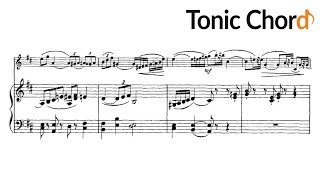
Pyotr Ilyich Tchaikovsky: Violin Concerto in D major, Op.35, Nicola Benedetti (violin)
 У вашего броузера проблема в совместимости с HTML5
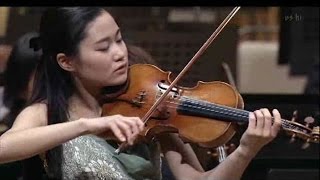
Pyotr Ilyich Tchaikovsky (1840-1893) - Violin Concerto in D major, Op. 35, Nicola Benedetti - Violin, Czech Philharmonic Orchestra, Jakub Hrůša - Conductor
I. Allegro Moderato – 00:00
II. Canzonetta: Andante – 18:49 ---
III. Finale: Allegro Vivacissimo – 25:19
The Violin Concerto in D major, Op. 35, was written by Pyotr Ilyich Tchaikovsky in 1878, and is one of the best known violin concertos ever written. There is no break or pause between the second and third movements.
The piece was written in Clarens, a Swiss resort on the shores of Lake Geneva, where Tchaikovsky had gone to recover from the depression brought on by his disastrous marriage to Antonina Miliukova.
Tchaikovsky made swift, steady progress on the concerto, as by this point in his rest cure he had regained his inspiration, and the work was completed within a month despite the middle movement getting a complete rewrite (a version of the original movement was preserved as the first of the three pieces for violin and piano, Souvenir d'un lieu cher). Since Tchaikovsky was not a violinist, he sought the advice of Iosif Kotek on the completion of the solo part (the violinist Iosif Kotek had been in Berlin for violin studies with Joseph Joachim)
The first soloist to find fault with it was its dedicatee, Leopold Auer. The distinguished soloist counted the honour conferred by Tchaikovsky a mixed blessing. "My first feeling was one of gratitude for this proof of his sympathy toward me," he said many years later, "which honoured me as an artist. On closer acquaintance with the composition, I regretted that the great composer had not shown it to me before committing it to print. Much unpleasantness might then have been spared us both." Auer denied, as had been reported, that he had declared the concerto "unplayable". But he did think it suitable to make adjustments, particularly to the conclusion. "He didn't necessarily make the third movement any easier," says Nicola. "Just a bit less tiring. In my opinion the third movement was not complimented in any way by Auer, quite the contrary in fact. The whole concerto had a slightly crazed, repetitive, extremely wild and rustic character, and to diminish this not only disturbs the structure but takes away that character. I also find that many of the smaller, more technical changes to the first movement only weaken its impact." The changes were partly a question of technical correction. Nicola allows that Tchaikovsky "was not one of the best composers for the violin, compared to others", by which she means his knowledge of what was feasible on the instrument were limited. "It's not always terribly violinistic. He doesn't highlight techniques developed by Paganini in the way many other mid to late Romantic composers did in their writing of concerti." But that, she adds, is the piece's strength. "It carries itself as a magnificent piece of music, not a focus on the violin's technical capabilities. Despite being a concerto that does test almost all of them, it does not draw the listener to focus on this." In short, Tchaikovsky took out his frustration on the violinists of posterity, from Auer onwards.“ (Album Notes, Jasper Rees)
Похожие видео

Мой аккаунт