

Monday, 17 August, 2026г.
















Где искать: по сайтам Запорожской области, статьи, видео ролики
пример: покупка автомобиля в Запорожье
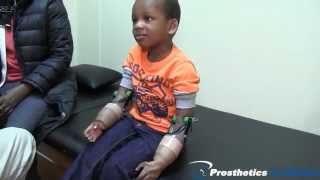
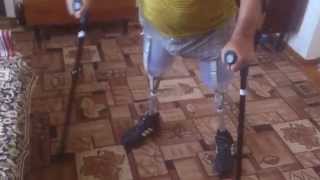
Rehabilitation of Bilateral Amputee - Exercises: Fitting of and Training with Prostheses
 У вашего броузера проблема в совместимости с HTML5
Amputation is the removal of a body extremity by trauma, prolonged constriction, or surgery. As a surgical measure, it is used to control pain or a disease process in the affected limb, such as malignancy or gangrene. In some cases, it is carried out on individuals as a preventative surgery for such problems. A special case is that of congenital amputation, a congenital disorder, where fetal limbs have been cut off by constrictive bands. In some countries, amputation of the hands, feet or other body parts is or was used as a form of punishment for people who committed crimes. Amputation has also been used as a tactic in war and acts of terrorism; it may also occur as a war injury. In some cultures and religions, minor amputations or mutilations are considered a ritual accomplishment. Unlike some non-mammalian animals (such as lizards that shed their tails, salamanders that can regrow many missing body parts, and hydras, flatworms, and starfish that can regrow entire bodies from small fragments), once removed, human extremities do not grow back, unlike portions of some organs, such as the liver. A transplant or a prosthesis are the only options for recovering the loss.
In the US, the majority of new amputations occur due to complications of the vascular system (the blood vessels), especially from diabetes. Between 1988 and 1996, there were an average of 133,735 hospital discharges for amputation per year in the US.
Types of amputation include:
Leg amputation
amputation of digits
partial foot amputation (Chopart, Lisfranc, Ray)
ankle disarticulation (Syme,[2] Pyrogoff)
below-knee amputation, abbreviated as BKA. Intentionally performed surgical below-knee amputation can be performed by transtibial techniques such as Burgess and Kingsley Robinson.
knee disarticulation (Gritti or Gritti-Stokes)
above-knee amputation (transfemoral)
Van-ness rotation/rotationplasty (foot being turned around and reattached to allow the ankle joint to be used as a knee)
hip disarticulation
hemipelvectomy/hindquarter amputation
Arm amputation
amputation of digits
metacarpal amputation
wrist disarticulation
forearm amputation (transradial)
elbow disarticulation
above-elbow amputation (transhumeral)
shoulder disarticulation and forequarter amputation
Krukenberg procedure
Face amputation
amputation of the ears
amputation of the nose
amputation of the tongue (glossectomy).
amputation of the eyes (blinding). Many of these facial disfigurings were and still are done in some parts of the world as punishment for some crimes, and as individual shame and population terror practices.
amputation of the teeth. Removal of teeth, mainly incisors, is or was practiced by some cultures for ritual purposes (for instance in the Iberomaurusian culture of Neolithic North Africa).
Breasts amputation
amputation of the breasts (mastectomy).
Genitals amputation
amputation of the scrotum.
amputation of the testicles (castration).
amputation of the penis (penectomy).
amputation of the foreskin (circumcision).
amputation of the clitoris (clitoridectomy).
Hemicorporectomy, or amputation at the waist, and decapitation, or amputation at the neck, are the most radical amputations.
Genital modification and mutilation may involve amputating tissue, although not necessarily as a result of injury or disease.
As a rule, partial amputations are preferred to preserve joint function, but in oncological surgery, disarticulation is favored.
http://en.wikipedia.org/wiki/Amputee
Теги:
Surgical specialties removal procedures Amputations Prosthesis (Medical Treatment) Amputation (Medical Treatment) coalition dating mobility predictor definition education
Похожие видео


Мой аккаунт