

Friday, 26 June, 2026г.
















Где искать: по сайтам Запорожской области, статьи, видео ролики
пример: покупка автомобиля в Запорожье
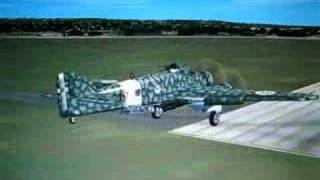
Savoia-Marchetti S.55x maiden flight
 У вашего броузера проблема в совместимости с HTML5
The Savoia-Marchetti S.55 was a double-hulled flying boat produced in Italy beginning in 1924. Shortly after its introduction it began setting records for speed, payload, altitude and range.
The S.55 featured many innovative design features. All the passengers or cargo were placed in the twin hulls, but the pilot and crew captained the plane from a cockpit in the thicker section of the wing between the two hulls. As well, the S.55 had two inline counter-rotating propellers, achieved by mounting the twin engines back to back. The engines were canted sharply at an upward angle. Two wire-braced booms connected the triple-finned tail structure to the twin hulls and wing.
Even though its design was unusual, the Savoia-Marchetti S.55 was a remarkably airworthy craft. In 1926, the S.55P prototype set 14 world records for speed, altitude and distance with a payload.[1] The S.55's greatest successes, however, were its many flights between Europe and the Americas.
The Brazilian João Ribeiro de Barros made an Atlantic crossing in the S.55 "Jahú" on 24 April 1927. Departing Santiago Island Beach, he crossed the Atlantic in the "Jahú" and landing at Fernando de Noronha Island, Brazil.
The Savoia-Marchetti S.55 was one of the first airplanes to cross the Atlantic Ocean when the Santa Maria under Francesco de Pinedo made the crossing between Dakar, Senegal and Pernambuco, Brazil setting out on 13 February 1927 - more than three months before Charles Lindbergh's first solo crossing. Pilots Francesco de Pinedo and Carlo del Prete took off from Sesto Calende, Italy, in an S-55 and headed west across the South Atlantic. Four months later, they arrived back in Italy, having flown nearly 48,280 km (30,000 mi) in 193 flying hours and having made just over 50 stops, including Rio de Janeiro, Buenos Aires and New York City.
The S.55 featured in a poster for Italo Balbo's transatlantic flight to the Century of Progress in Chicago.
The Italian Air Marshall of the time, Italo Balbo soon became famous for organizing fleets of S.55s for Atlantic crossings, culminating in his 1933 flight with 24 aircraft to Chicago's Century of Progress International Exposition. On 1 July 1933, General Balbo commanded a flight of S-55s from Orbetello, Italy, completing the flight in just over 48 hours, maintaining a tight "V" formation. These large fleets of aircraft became so well known that even today a large formation is sometimes called a "Balbo".
The aircraft went on to serve the Italian Air Force and the Luftwaffe as a long-range bomber and patrol aircraft, but by World War II, the last 13 S.55s were no longer servicable and were kept in reserve.
S.55X
Variant fitted with Isotta-Fraschini Asso 750 engines for North Atlantic formation flights, later armed and used as a reconnaissance-bomber.
http://en.wikipedia.org/wiki/Savoia-Marchetti_S.55
Теги:
seaplane airplane model plan hobby construction diy mechanics aviation space waterplane flying-boat floatplane Wasserflugzeug hydravion aeroplano idrovolante hidroavión гидроплан secovce modelari hydroplan letectvo letecti duck modelarstvo modelarstvi water landing amphibian slovak czech unorthodox 水上飛機 水上飞机 水上機 เครื่องบินทะเล 수상기 pesawat terbang air eruplanong pantubig Italo Balbo بحرية Savoia Marchetti
Похожие видео



Мой аккаунт