

Wednesday, 01 July, 2026г.
















Где искать: по сайтам Запорожской области, статьи, видео ролики
пример: покупка автомобиля в Запорожье
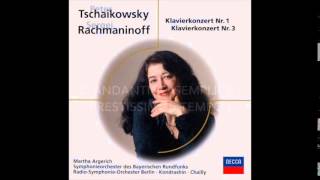
Tchaikovsky | Piano Concerto 1
 У вашего броузера проблема в совместимости с HTML5
♫ Piano Concerto Nº 1 of Tchaikovsky ♫
Nr. 1 of Tchaikovsky is one of the most formidable concertantes piano works of the whole repertoire. This is perhaps due to its perfection as musical works (in academic terms), but their immediate energy to the Captivate and enthrall the listener, which makes a huge popularity in the best sense of the word. They talked and written many things (absurd) quality music, this concert, pointing to alleged defects in shape and serious mistakes in composition and orchestration techniques, but really what can import these Intelligent analysis this work that we love.
♫ Movements of the Concerto for piano No. 1 ♫
I. Allegro non troppo e molto maestoso Allegro con spirito - [00:00]
The movement, unusually long (20 min), opens throughout the Orchestra and then enters the main theme carried by strings, accompanied by piano chords that made famous the complete concert. The movement, a kind of duel between the piano and the Orchestra, presents considerable difficulties for the soloist.
II. Andantino semplice-Prestissimo - [23:18]
Starts with a great color theme that first exposed the flute before he was moved by the piano. A central part-prestissimo-serves as a contrast to its lightness and its rhythm by three-quarters.
III. Allegro con fuoco - [31:01]
It was built on themes based on Russian folk rhythms and dances. The first theme, rhythmically, shows a distinctly Russian. In the final coda still feel the first theme, the lead to a thunderous end with enormous strength, maybe a little gimmicky, which requires the creation of the famous "octaves" that only a few virtuosos can successfully address the pianist. In the version presented, Martha Argerich does die of laughter.
♫ History ♫
the first version of the Concerto No 1 for piano and Orchestra by Piotr Ilich Tchaikovsky dating back to 1874. At this point in his life, 34 years and despite their nervous breakdowns, Piotr had already permanently as a composer. As well as the unfunny comments to Nikolai Rubinstein received by keyboard virtuoso when he played before that, his first piano concerto. Nikolai was his friend, who had accompanied the Piotr Ilich provincial in his early years in Moscow, shows the city and opening for him, later, many doors difficult to overcome.
It was Christmas of 1874, and Piotr and Nikolai had been invited to wait for Russian Santa Claus at a friend's House in common. But Nikolai had suggested to take your new score Piotr, as well, the home of a friend, will the Academy concert had just review. Piotr has gladly accepted because he wanted to hear the opinions of a virtuous, know its technical opinion on some very difficult passages of the execution, which at the time and still has them.
When he finished playing the initial movement, Nikolai remained silent, without saying a Word. Piotr was not discouraged and continued with the rest.
-And good? He asked at the end of the full concert.
Nikolai did not spare any vulgarity. He said that the concert was nothing, it was unenforceable, that people were unhappy, in short, tried to Piotr as a beginner, inexperienced and unable to. So, at least, Piotr Ilich understood. Then he would have spoken in his diary in the following terms:
"I was stunned, but plagued by that scene. I'm not a fool, he starts making his first attempts at composition; I don't need lessons from anyone, especially if I appear in a harsh and hostile tone. "
But Nikolai was also not cheap. Piotr had planned to write the concerto this virtuoso of his day, but after relations cooled after the rough, finally dedicated to pianist and conductor Hans von Büllow, a great admirer of the Russian composer, who debuted as a soloist in Boston, USA, in 1875 and then straight everywhere with great success. However, Nikolai suggestions fell on deaf ears as Tchaikovsky, fifteen years later, completely redesigned the piano part, do the concerto, the piece then, favorite of pianists, Nikolai Rubinstein included.
♫ Recommended recordings ♫
1) Horowitz/Toscanini/NBC Symphony Orchestra (RCA): within the historical records, this is already legendary live recording of 1941, with Vladimir Horowitz at the piano, accompanied by Arturo Toscanini and his NBC Orchestra.
(2) Richter/Karajan/Wiener Symphoniker (DGs): If authentic Russian volcanic fire can be seen in the recording of Horowitz/Toscanini, renowned recording of Sviatoslav Richter by Herbert von Karajan and Vienna (Symphony), back to the German fought vision from work.
3) Emil Gilels/Zubin Mehta/New York Philharmonic (SONY): finally entering digital age presents a live recording, recorded in 1980 at the Avery Fisher Hall of Lincoln Center (New York) and so far greater than who writes you heard this concert.
Теги:
Pyotr Ilyich Tchaikovsky (Composer) Piano Concerto (Composition Type) Piano Concerto No. 1 (Composition) Piano (Musical Instrument) Classical Music (Musical Genre) Romanticism (Art Period/Movement)
Похожие видео
![Piano Concerto no. 1 - Pyotr Ilyich Tchaikovsky [with score - 2/2]](/images/mq/b/8a/844fypUc4Cqdff.jpg)
![Piano Concerto no. 1 - Pyotr Ilyich Tchaikovsky [with score - 1/2]](/images/mq/2/45/3BavIBDk0NUax2.jpg)

Мой аккаунт