

Thursday, 18 June, 2026г.
















Где искать: по сайтам Запорожской области, статьи, видео ролики
пример: покупка автомобиля в Запорожье
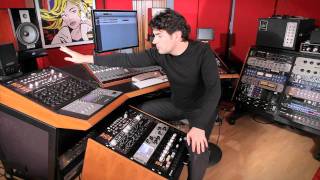
The SoundLAB – Mastering Gear Overview
 У вашего броузера проблема в совместимости с HTML5
https://www.discmakers.com/soundlab/ - For the July edition of our Disc Makers Twitter chat (#DMchat) on Tuesday, July 19th at 4 PM EDT, join professional sound engineer, Brian Lipski, for an in-depth look at what goes into mastering your music.
• Focusrite Blue 330 compressor:
Stereo compressor designed specifically for mastering engineers. Allows us to control the dynamic range of a mix, smooth out elements that may be sticking out too much, like vocals, and glue everything together for a consistent sound. Adding some mild compression to a mix also allows us to begin raising the overall volume of the recording.
• Lavry Blue D/A and A/D convertors:
When mixing a combination of analog and digital gear it’s important to use high quality convertors at each stage to preserve the resolution of the audio. In our case we typically are playing back hi-resolution digital source files in our workstation, converting to an analog signal using our Lavry Blue convertors, passing the signal through our analog Eq and compressor, re-converting to a digital signal, again through the Lavry, then running through any digital tools we need for the session and capturing that digital output back in our workstations. The Lavry units are sonically transparent, low noise, convertors that can capture the subtle EQ and detail of the mastered audio.
• GML 9500 analog mastering EQ:
An equalizer allows a mastering engineer to boost or cut frequencies in a mix. An engineer may decide to roll off low frequency information in a mix that is boomy and bass heavy, boost midrange frequencies to enhance the vocal range, or add some subtle detail to the top end to bring out ambience and clarity. The GML 9500 analog EQ from George Massenburg Labs is a stereo mastering EQ featuring 5 bands of parametric EQ, detented pots for accurate recall of session settings, and extremely low noise and distortion to keep the signal clean. This is the main EQ in our Blue mastering room.
• Weiss EQ-1 digital EQ:
The Weiss EQ-1 is a 7-band digital EQ designed specifically for mastering studios. Much like the GML EQ I talked about previously it allows the mastering engineer very precise control when cutting to boosting different frequencies to correct issues in a mix or enhance certain elements. Being an all digital unit it is extremely clean, quiet, and sonically neutral.
• Weiss DS-1 Compressor, limiter, de-esser:
The Weiss DS-1 unit allows the mastering engineer to compress, limit, or de-ess a mix. Limiting a mix reduces the level of transients or spikes in the recording, and allows the overall volume to be increased, sometimes dramatically. The Weiss unit is extremely transparent when used as a stereo limiter allowing the engineer to increase the overall volume of a recording while not imparting a harsh or “squashed” sound to the master. When used in split band mode it allows the engineer to compress a certain frequency range, which is very useful for controlling the low end of a recording and can be used to add punch to the bass/kick in a recording.
• Dynaudio M3 monitors:
The Blue room features a pair of Dynaudio M3 passive monitors. These are full range monitors that contain (2) 12” woofers, (2) 6” mid-range drivers, and a 1” tweeter. Extremely detailed, and able to handle high volumes without breaking up. Very flat response, particularly in the low frequencies, allow a mastering engineer to hear any low frequency rumble or boominess that may be missed when mixing on smaller monitors. That’s essential if those issues are to be corrected with EQ cuts during the session.
Теги:
disc makers mastering
Похожие видео
Мой аккаунт