

Thursday, 13 August, 2026г.
















Где искать: по сайтам Запорожской области, статьи, видео ролики
пример: покупка автомобиля в Запорожье
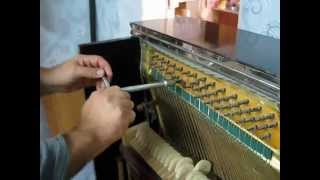
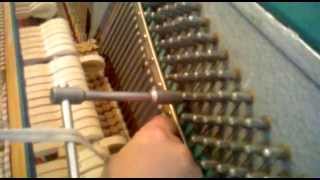
Tuning pins (piano) - Tightening. Part #11.Corrugated cardboard. "Foot wrap" technique.
 У вашего броузера проблема в совместимости с HTML5
Cardboard shim for loose tuning pin: This is a cost-effective method of fixing a loose tuning pin. It avoids de-tuning adjacent strings, which can happen with methods that involve hammering tuning pins in. First, turn the tuning pin enough to slacken the string coils. Then, using a narrow (but strong) screwdriver or an awl, lever the end of the string out of the tuning pin hole. (This point in the string is called the 'becket'). Lever against the tuning pin itself to prise the string out. Now unscrew the tuning pin completely, leaving the string and coils in place. From some corrugated cardboard about 2mm or 3mm thick, cut a piece 20mm by 50mm. Insert this strip into the tuning pin hole (It may be helpful to curve the cardboard round a screwdriver shaft first, to make it easier to insert into the tuning pin hole). Firmly start the tuning pin into the hole, with the cardboard shim in place. Carefully turn the tuning pin into the hole, going quite slowly so as to avoid a build-up of heat. Turn the pin all the way in, to the same level as before. Carefully insert the end of the string (the 'becket') back into the tuning pin hole, using suitable pliers. Make sure that the string coils are kept tight, using a stringing hook or a screwdriver. Tune the string to pitch. The cardboard shim method will keep the pin tight for years and does not involve glue. Могу предложить далеко не классический, но довольно результативный и эффективный метод восстановления фиксации колка в ВБ. Я его называю методом «портянки». Метод отличается своей малозатратностью, возможностью избежать «расстройства» соседних колков, которое неизбежно возникает при классическом забивании колка. Аккуратно отпустите «нестроящий» колок, чтобы ослабли колечки на вербиле. Затем при помощи тонкой, но прочной отвёртки (шила) выньте конец струны из колка. Полностью выкрутите колок, но при этом не вынимайте струны. Если Вы это сделаете, то, в некоторых случаях, будет трудно обратно натянуть струну на вворачиваемой колок. Вырежьте из плотного гофрированного картона (2-3 мм. толщиной) полоску размером 50х20 мм. Вставьте в посадочное место, чтобы картон расположился в половину окружности. Зафиксируйте картон до конца посадочного места. Вставьте колок в посадочное место и с некоторым усилием, постепенно вворачивайте. Процедура разделите на 3-4 стадии, чтобы колок не нагревался. Вворачивайте колок до первоначальной («родной») зоны фиксации в ВБ. Теперь очень нежно и с небольшим усилием взденьте при помощи отвёртки конец струны в отверстие колка. Фиксируя и доводя колок до нужной высоты, прижимайте отвёрткой колечки струны, чтобы они не «расползались». Советую, если у Вас не строит парный колок, во время натяжения уравнять приблизительно по высоте звука оба колка одной струны.
Похожие видео


Мой аккаунт