










Где искать: по сайтам Запорожской области, статьи, видео ролики
пример: покупка автомобиля в Запорожье
Russia: AUKUS, QUAD alliances erode cooperation in ASEAN format - Lavrov
 У вашего броузера проблема в совместимости с HTML5
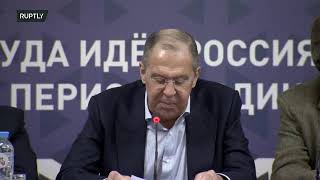
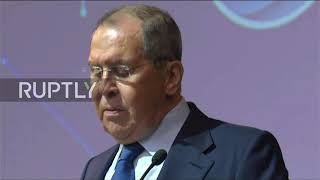
The Indo-Pacific concept is aimed at breaking up the ASEAN system and containing China, Russian Foreign Minister Sergey Lavrov said while addressing the 29th Assembly of the Council on Foreign and Defence Policy (CFDP), on Saturday.
The diplomat said the US establishment of the QUAD quartet and the AUKUS bloc were aimed at “eroding the universal formats in the Asia-Pacific region” that exist under the auspices of ASEAN.
These formats, according to Lavrov “were based on the principle of consensus and involved all the key countries of the region, including China, India, Japan and Russia, on terms of equal rights and mutual consideration of interests.”
Lavrov also touched upon cybersecurity saying that a resolution had been agreed earlier this year approving a five-year schedule for the working group’s negotiating format for all UN members.
“We will discuss problems that are acute in the sphere of cyber security, cyberspace security. This trend, unfortunately, has been gaining momentum for a long time and now it has reached its climax,” the minister said.
Additionally, in his speech, the diplomat responded to accusations that Russia “lacks ideology in foreign policy”. He called the ideologisation of foreign policy a losing path, as this is proven by “not only Soviet but also worldwide experience.”
SOT, Sergei Lavrov, Russian Foreign Minister (Russian): “One of the current trends is the Indo-Pacific strategies invented by the US, embodied by the QUAD quartet - the US, Japan, India, Australia - and the recent establishment of the AUKUS bloc. All this goes in line with the erosion of the universal formats in the Asia-Pacific region that have existed under ASEAN auspices and were ASEAN centric for the past decades: the EAC, the ASEAN Security Forum, the ASEAN Defence Ministers and Partners Meetings (ASEAN Plus) and a variety of other formats. They were based on the principle of consensus and involved all the key countries of the region, including China, India, Japan and Russia on an equal footing and mutual consideration of interests. The Indo-Pacific concept seeks to dismantle this system based on the need to respect the indivisibility of security, and has openly proclaimed its goal to contain China. These rules are manifesting themselves here as well. Now on the agenda is the ‘Summit for Democracy’ being convened by the US in December this year. It is clear who will be selecting the candidates for it. It is an American initiative, they will decide who will be called a democracy in their eyes. It will be interesting even “from a sporting point of view” to see who will be invited there. I have already heard it argued that a whole range of key allies of the United States, especially in the Middle Eastern region, cannot be called democracies, and not to invite them. We shall see. This will require some diplomatic ingenuity, but a happy beginning.
A recent example: yesterday or the day before yesterday it was announced that US President Joe Biden was convening a summit on cybersecurity this month. It is said that about 30 states are invited, although cyber security issues have been discussed within the UN at the initiative of Russia and many other countries for decades, almost 20 years to be exact. Earlier this year, a resolution was agreed upon that approved a five-year timetable for the negotiation format of the open-ended working group, i.e. open for all UN members. We will discuss problems that are acute in the field of cyber security, cyberspace security. This trend, unfortunately, has been gaining momentum for a long time and has now reached its apogee. We see in this situation that international relations are becoming more and more complex, multi-layered, non-linear, and there is a need for high-quality expert analysis.”
SOT, Sergei Lavrov, Russian Foreign Minister (Russian): “We are sometimes blamed for the fact that unlike the West, which imposes its attitudes everywhere, including through the concept of a ‘rule-based world order’, we lack ideology in foreign policy. With all due respect to people who sometimes say so, I have my own opinion and believe that not only Soviet but also global experience shows that ideologisation of foreign policy is a losing path.”
#Russia #ASEAN #Lavrov
Video ID: 20211002-032
Video on Demand: https://ruptly.tv/videos/20211002-032
Contact: [email protected]
Twitter: http://twitter.com/Ruptly
Facebook: http://www.facebook.com/Ruptly